Reviews
Part of A plain-English look at how EV charger installation works
EV charger installation options, reviewed without the sales pitch
Renters cannot rewire a building they do not own. The five options that remain, what each one costs in convenience, and how to ask a landlord properly.
What to take away
- Level 1 from an existing outlet is the first of the five EV charger installation options, and it is the one people dismiss earliest.
- Never run a cord across a walkway or through a window. Never use a household extension cord for charging.
- Ask a landlord in writing, with a specific proposal. Vague requests get vague refusals.
- Some states extend charging rights to renters. Check before assuming the answer is no.
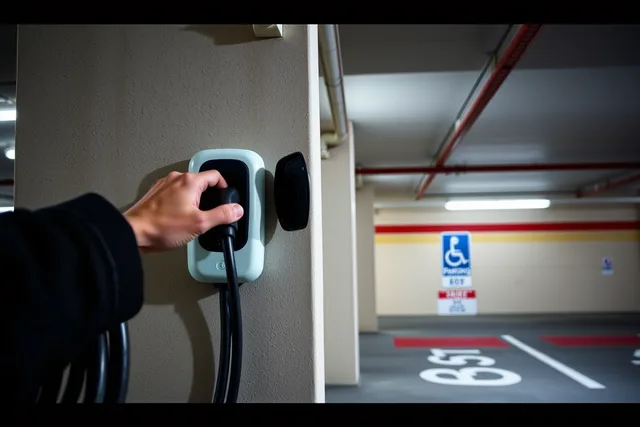
Renters cannot rewire a building they do not own, and a numbered bay in a shared garage narrows the physical choices further. Five EV charger installation options remain, and the first one is better than its reputation.
The table below names the equipment behind each one and gives typical prices. No sales visit required.
Installation options
Real examples
- Level 1 from an existing outlet
- 120 volt cord that ships with a Chevrolet Bolt EUV or Nissan Leaf; Tesla Mobile Connector, about $250
- Charging away from home
- Electrify America, EVgo and Tesla Supercharger ports, found through PlugShare
- Landlord-approved Level 2
- ChargePoint Home Flex, Grizzl-E Classic, Wallbox Pulsar Plus, Emporia
- Portable Level 2
- Tesla Mobile Connector with a NEMA 14-50 adapter, Grizzl-E Mini, Splitvolt dryer-outlet splitter
- The legal route
- California Civil Code 4745; state pages on the Alternative Fuels Data Center laws index
Typical cost
- Level 1 from an existing outlet
- $0 if the cord came with the car
- Charging away from home
- Typically $0.25 to $0.60 per kWh, plus session or idle fees
- Landlord-approved Level 2
- Typically $400 to $700 for the unit, $500 to $2,000 for the electrician
- Portable Level 2
- Typically $250 to $500
- The legal route
- No cost to read
Best for
- Level 1 from an existing outlet
- Drivers who park at home 10 hours or more
- Charging away from home
- Anyone with a station on a regular route
- Landlord-approved Level 2
- Tenants who plan to stay several years
- Portable Level 2
- Renters who move, where a suitable outlet exists
- The legal route
- Tenants in states with tenant charging laws
Option one: Level 1, from an outlet that already exists
A NEMA 5-15 outlet is the ordinary 120 volt, 15 amp wall socket. The charging cord that ships with a Chevrolet Bolt EUV or a Nissan Leaf plugs straight into it. Tesla stopped including a cord with new cars in 2022, and the Mobile Connector sells separately for about $250.
Level 1 adds only a few miles of range per hour, typically three to five. That sounds dismissive until you do the arithmetic. Twelve hours parked overnight, every night, covers a great many commutes. If you drive a moderate distance daily and park at home for long stretches, Level 1 may cover you entirely without anybody installing anything.
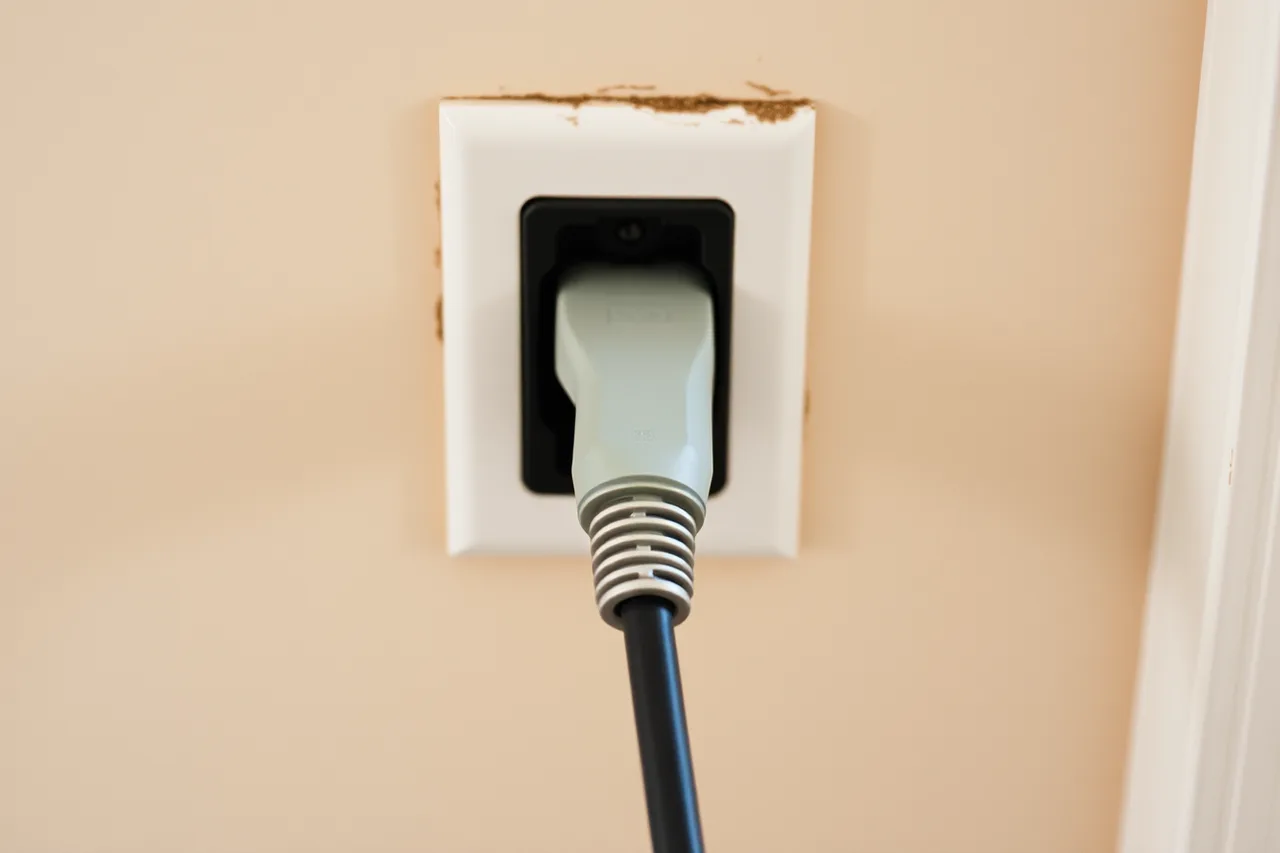
The conditions matter. The outlet should sit on a circuit that is not heavily loaded, ideally close to dedicated. It should be in good condition. If it warms noticeably during charging, stop and have it looked at. Use only the manufacturer's cable, plugged directly into the wall.
Never use a household extension cord or a power strip. Charging draws near its maximum for hours, which is exactly what those are not designed for. The same caution applies to adapters, where the extra connection point is where heat builds.
Option two: charge somewhere other than home (ChargePoint, EVgo, Electrify America)
Workplace charging, a public station on a regular route, or a nearby garage with a monthly arrangement.
Level 2 ports at work are often free or billed by the hour. ChargePoint and Blink supply and manage many workplace and multifamily ports, and drivers pay through their apps.
On the road, DC fast charging is the expensive version. Electrify America, EVgo and Tesla Supercharger sites typically run $0.25 to $0.60 per kWh, and networks add idle fees once the car finishes. Monthly plans in the $4 to $8 range cut the per-kWh rate. Tesla's Supercharger membership for non-Tesla drivers runs $12.99 a month.
This is unglamorous and it works, particularly if you can charge where you already spend hours. The cost is planning: you fit charging into a schedule rather than forgetting about it. PlugShare is a free app that lists stations with recent check-ins and reported prices.
Option three: ask the landlord
Worth doing properly, because a vague request produces a vague refusal.
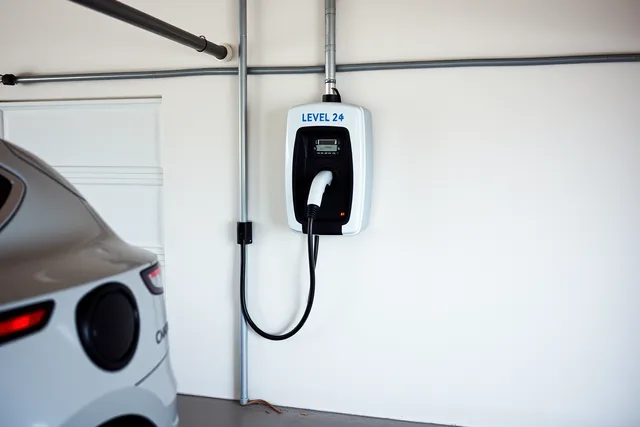
Put it in writing with a specific proposal. Name the bay and the equipment. A 48 amp hardwired unit such as the ChargePoint Home Flex, the Wallbox Pulsar Plus or the Emporia is the usual specification. A Grizzl-E Classic plugs into a NEMA 14-50 outlet instead.
Then list the licensed contractor, who pays for installation, how electricity is metered and billed, who owns the equipment after the tenancy, and what happens on removal.
Those are the same questions a condo board has to answer before it approves anyone. A landlord who meets them halfway has less to work out.
Hardware typically runs $400 to $700. An electrician typically charges $500 to $2,000, and more where the panel sits far from the bay or needs an upgrade.
Offer to pay. Many landlords say no to an open-ended request and yes to a fully specified one that costs them nothing and adds an amenity.
Requirements are increasingly written into building standards for residential developments, and the federal record of charging station building standards for residential developments shows the direction. Point that out if it helps. A landlord planning renovation may find it cheaper to do this once, deliberately, than to face it later.
Option four: check whether the law is on your side
Several states have extended charging protections beyond owners to tenants. They typically require a landlord to permit installation at the tenant's expense, subject to reasonable conditions.
California Civil Code 4745 is the best known, covering renters with a parking space when the tenant pays and meets the law's terms. It is the same shape of provision that limits what an association may refuse an owner.
Provisions vary widely. Some apply only to certain building types, and some require the tenant to carry insurance and pay for removal. Check your own state instead of a summary.
State records, like the electricity laws and incentives in Florida index, show how one state documents its provisions, and every state has an equivalent page.
Read it before you ask, so you know whether you are making a request or asserting a right. It changes the tone of the conversation and sometimes the outcome.
Option five: a portable unit you take with you
A plug-in Level 2 unit on a suitable outlet, if one exists, or a Level 1 unit you can move between properties.
The Tesla Mobile Connector is the common example: about $250, with extra adapters around $45 each, including the NEMA 14-50 plug used at RV parks.
The Grizzl-E Mini is a portable 40 amp unit, typically about $400 to $500. A Splitvolt splitter, typically around $300, shares a NEMA 10-30 or 14-30 dryer branch between the dryer and the car.
The advantage is that it is yours and it leaves when you do. The constraint is that it still needs an appropriate outlet on an appropriate circuit, which is the thing renters usually lack.
A portable unit on an extension cord is not an option. Neither is running the dryer and the car at the same time on one shared branch.
What not to do
| Practice | Why not |
|---|---|
| Cord across a sidewalk or shared walkway | Trip hazard, and it will attract complaints and liability |
| Cable through a window or door | Damages the cable jacket and defeats the seal |
| Household extension cord or power strip | Not rated for sustained high current |
| Adapters bought on price alone | The connection point is where heat builds |
| Charging from an outlet that warms up | Symptom of a wiring problem, not an inconvenience |
| Dryer and car on one 30 amp branch at the same time | The branch is sized for one appliance, and a load-sensing splitter is the safe way to share it |
| Using a landlord's shared-garage outlet without asking | Unmetered electricity is a lease problem on top of the electrical one |
Small garages and awkward bays
If space itself, not permission, is the constraint, the practical question is cable length against how the car actually parks.
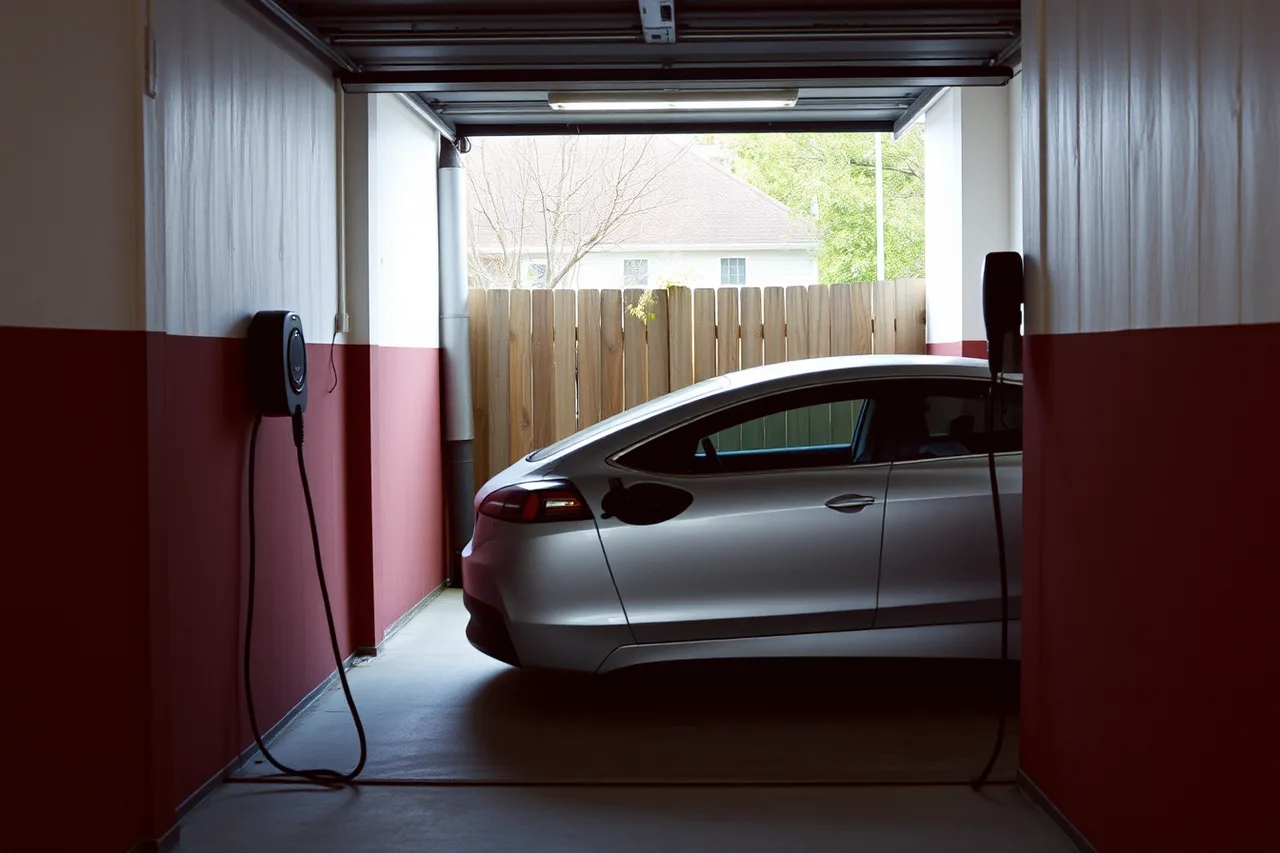
Is the inlet on the side facing the unit? Would a connected cable block a walkway or a neighboring bay? The charge port sits on the nose of a Nissan Leaf, on the front driver's side fender of a Chevrolet Bolt, and on the rear driver's side of a Tesla Model 3.
Measure the real bay with the real car before choosing equipment. A cable that reaches on one model does not on another.
How installation actually works is worth reading before approaching a landlord, so the proposal you make is specific. And if permission is granted, the checklist for choosing an installer covers what to put in writing.