Maintenance
Part of How to plan condo EV charging from start to finish
A practical maintenance plan for condo EV charging
What condo charging maintenance actually involves, by interval: monthly checks, seasonal work, annual inspection and the faults that need same-day action.
What to take away
- Name one owner of this equipment before it is energized. Most long outages are arguments about responsibility, not technical faults.
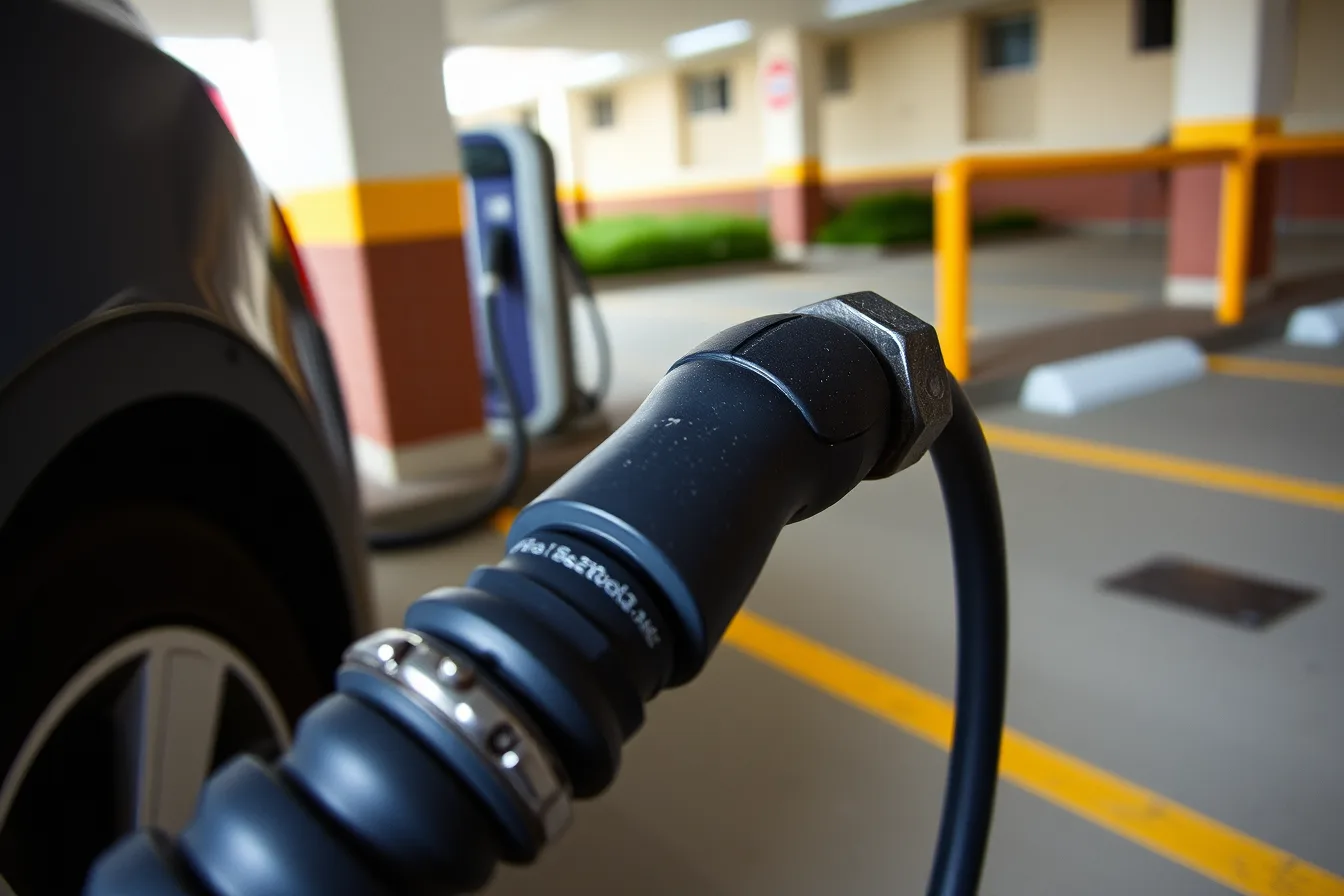
- Cables fail first. They are handled daily, driven over occasionally and left on the ground constantly.
- Keep the maintenance schedule by interval, not by component. Nobody follows a schedule organized around parts.
- Some symptoms need same-day action. They are listed at the end, and they are the reason this plan exists.
A damaged cable can sit unusable for six weeks while the board, the manager, the installer and the network provider each explain why it is somebody else's problem. That is not a technical failure. It is a missing sentence in a document.
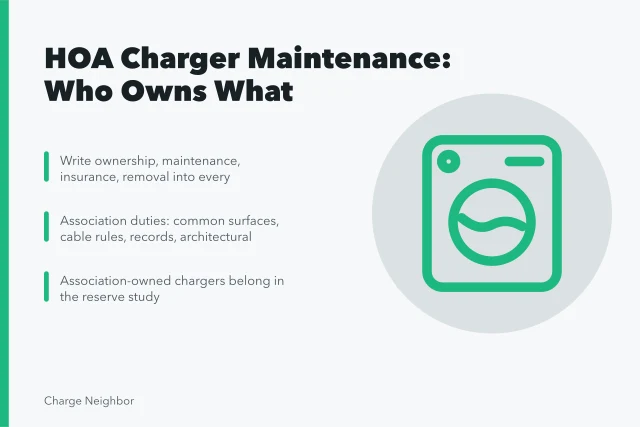
So before anything else: write down who owns this equipment, who is authorized to spend money fixing it, and what number a resident calls at nine on a Sunday night. Where owners hold their own chargers, drawing that boundary takes more care than it sounds like it should. Everything below assumes those three answers exist.
Every month
Ten minutes, done by whoever already walks the property.
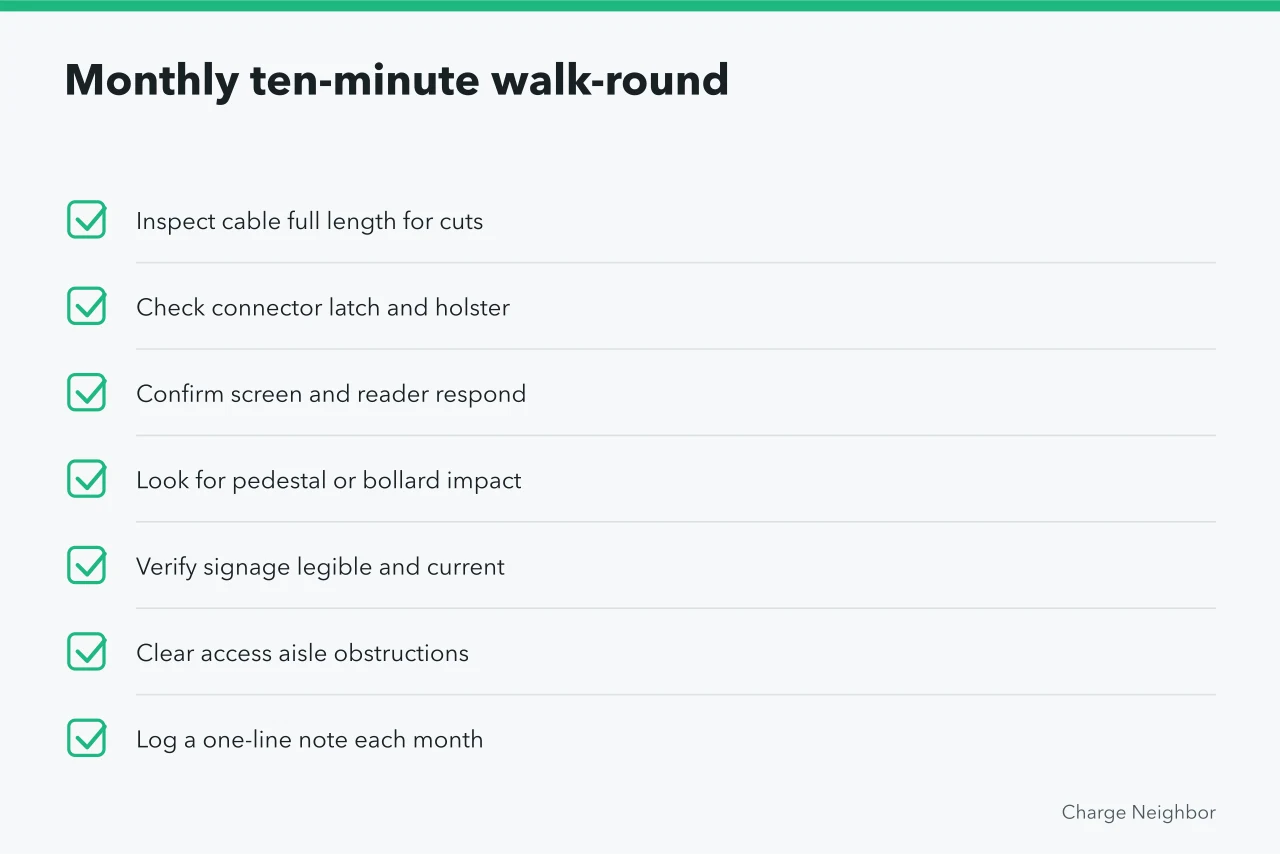
Log it. A one-line note each month is what turns "it has always been like that" into a date.
Every season
Spring. Clean enclosures and check drainage around pedestal bases. Look for winter salt damage on metal and concrete.
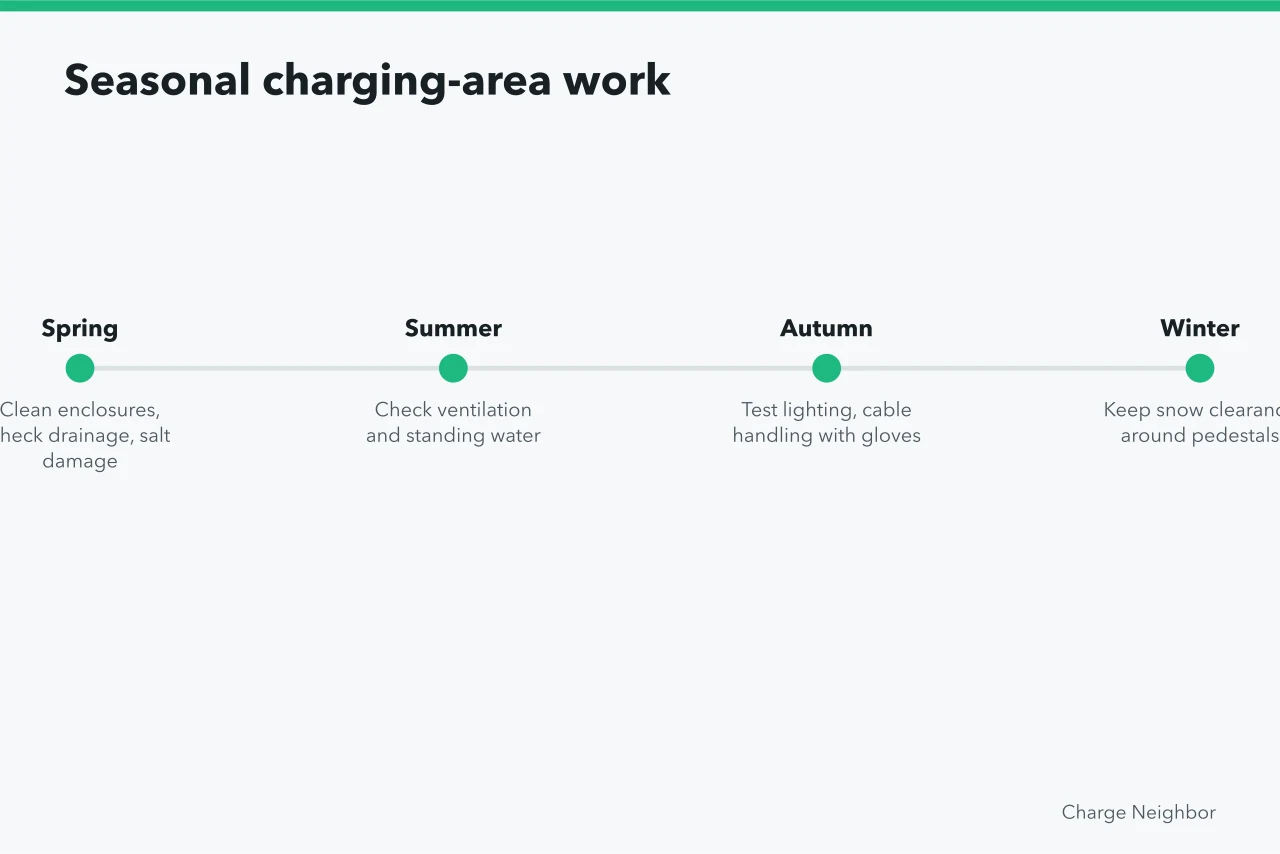
Summer. Check ventilation and that units are not sitting in standing water after storms. Heat is when marginal connections announce themselves.
Autumn. Test lighting in the charging area before the evenings get dark. Confirm cable management still works with gloves on.
Winter. Keep clearance around units when snow is moved. Snow piled against a pedestal is how bollards get hit by a plow. Confirm the charging spaces are on the clearing route at all, which is a question worth settling before the first storm rather than during it.
Every year
The annual visit is where the real inspection happens, and it needs a licensed electrician rather than a walk-round.
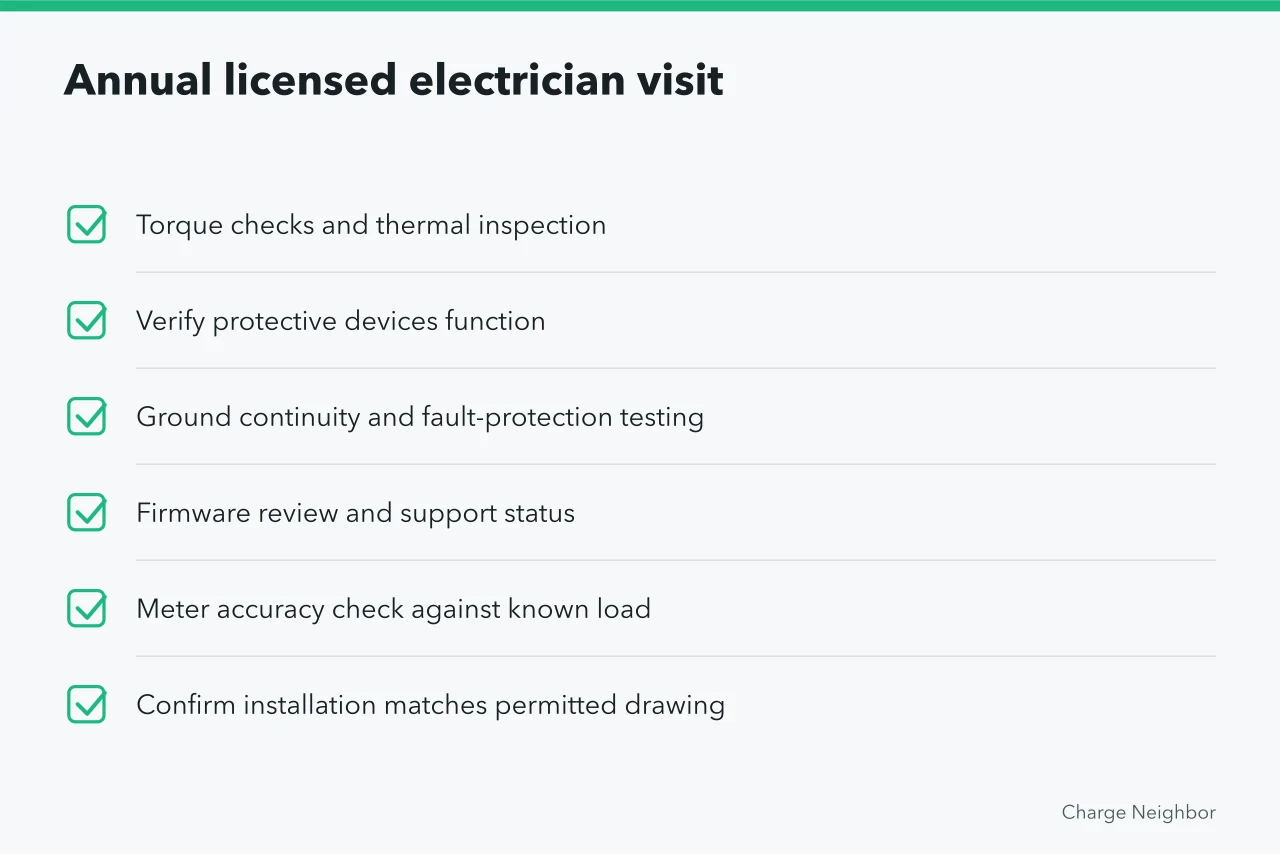
That last item catches what nobody expects: a circuit re-fed during other work, a unit relocated slightly, an added port that never went through the permit. Checking it is easier when the as-built record the installer handed over is on file.
Requirements for inspection and compliance of charging equipment vary by jurisdiction. An annual review keeps a building on the right side of them, rather than discovering a problem at a sale.
Every few years
Budget for these on a calendar rather than treating them as surprises. Cables and connectors are consumables in a shared installation and will need replacing. Screens, card readers and payment hardware have shorter lives than the units they sit in. Networked equipment eventually reaches a firmware version its maker stops supporting, which is a replacement decision with a deadline attached.
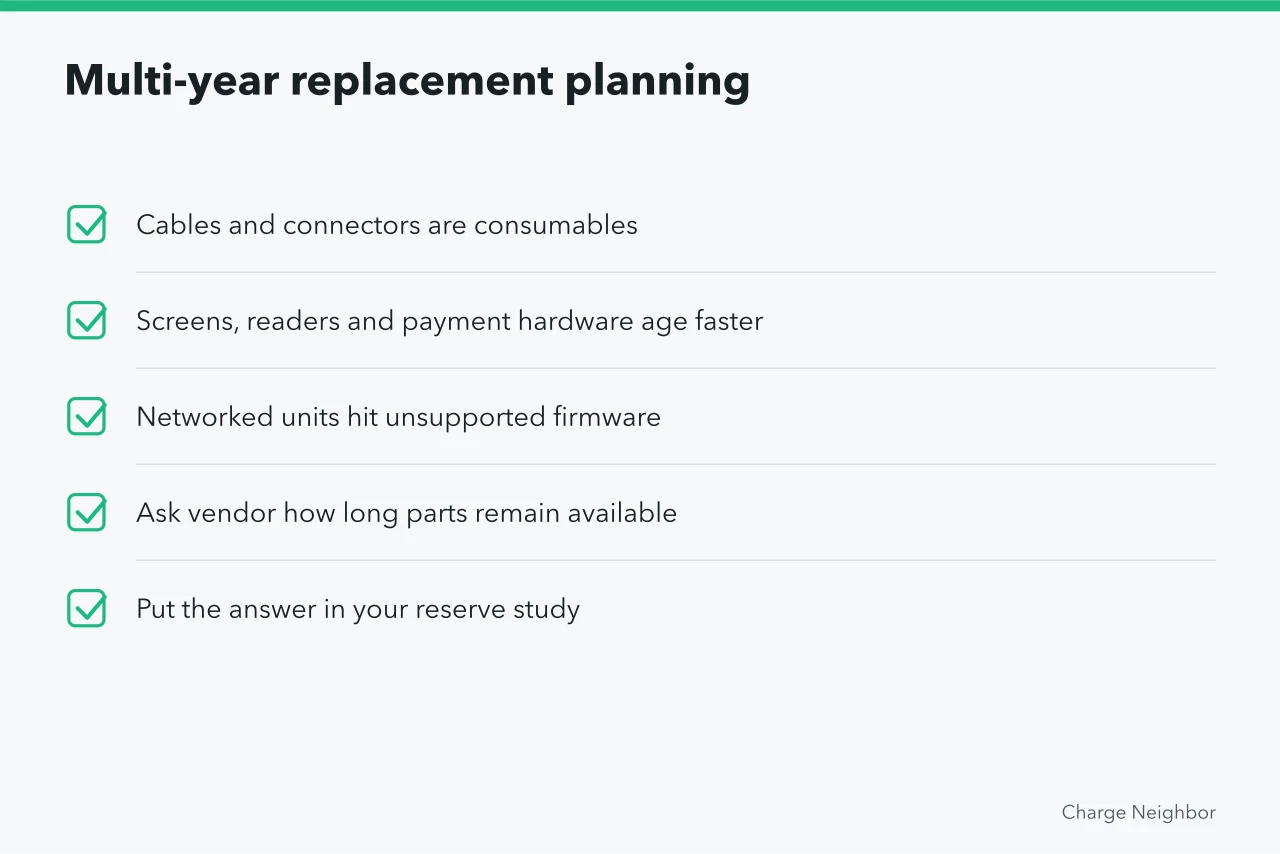
Ask the vendor now how long parts remain available after a model is discontinued. The answer belongs in your reserve study, and on the list of things worth comparing before you buy rather than after.
Handling and the things residents do
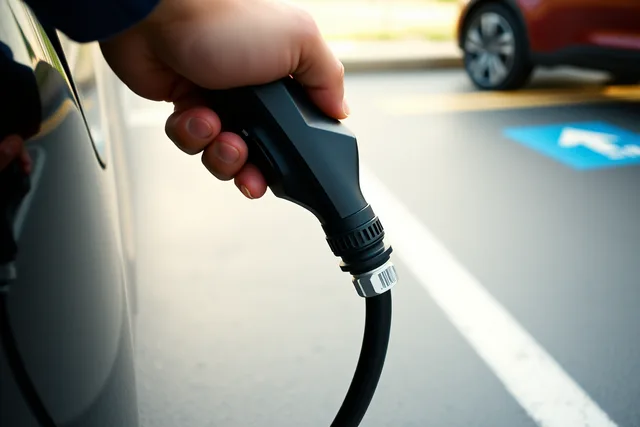
Most cable damage is not vandalism. It is ordinary handling: a connector dropped on concrete, a cable stretched across a space and driven over, a driver yanking a stuck plug.
Adapters deserve mention: residents buy them independently and use them unsupervised, so federal recommendations on charging adapter safety say why an adapter is not a neutral accessory. It adds a connection point that can overheat, and quality varies widely.
Decide whether your policy permits them, say so in writing, and put it on the sign rather than leaving it to chance.
Symptoms that need attention today
Not next week.
| What you see | Why it cannot wait |
|---|---|
| Any exposed conductor, or a cut through the outer jacket | Shock and fire risk. Take the port out of service now. |
| Scorching, discoloration or a burning smell at a connector | Overheating connection. De-energize and call an electrician. |
| A unit that trips its breaker repeatedly | A fault, not a nuisance. Resetting it repeatedly is the wrong response. |
| Water inside an enclosure | Rating has been compromised somewhere. |
| A connector that will not release from a vehicle | Safety and entrapment issue for the driver. |
| Sessions billing at obviously wrong amounts | Trust damage compounds daily, and refunds get harder the longer it runs. |
Give residents one number for all of these and make it the same number on the sign, in the resident guide and in the app. Fault reports that go to three different places tend to go nowhere.
Many of these obligations are decided long before the first fault, when the board chooses who owns the equipment. The planning sequence covers that decision, and the mistakes that make maintenance expensive are mostly made in the same meeting.
Common questions
Who should own the maintenance obligation? Whoever owns the equipment, stated in writing before installation. Owner-installed units at private spaces usually stay with the owner, but only if your agreement says so.
How much should we budget annually? Ask your installer for a service quote and add cable replacement at a realistic interval. Building it into reserves is better than treating each failure as an unbudgeted repair.
Can our maintenance staff do the monthly checks? Yes, and they should. The monthly list is visual. The annual inspection is electrical work and needs a licensed electrician.
A resident damaged a cable. Who pays? Your policy decides, which is why it needs to address damage explicitly. Without a rule, the association absorbs it by default.