Guides
A plain-English look at how EV charger installation works
What actually happens when a charger gets installed, explained without jargon: the survey, the circuit, the permit, the inspection and the handover.
What to take away
- A charger is a dedicated circuit with a smart box on the end. Most of the work is the circuit.
- The survey answers one questioncan your panel carry another large, constant load?
- Permits and inspection are not bureaucracy. They are the only independent check that the work is safe.
- Nothing about this is fast. The waiting is utility lead times and plan review, not the labor.
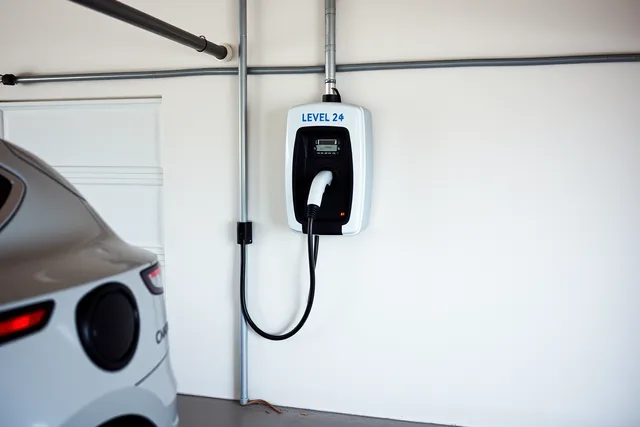
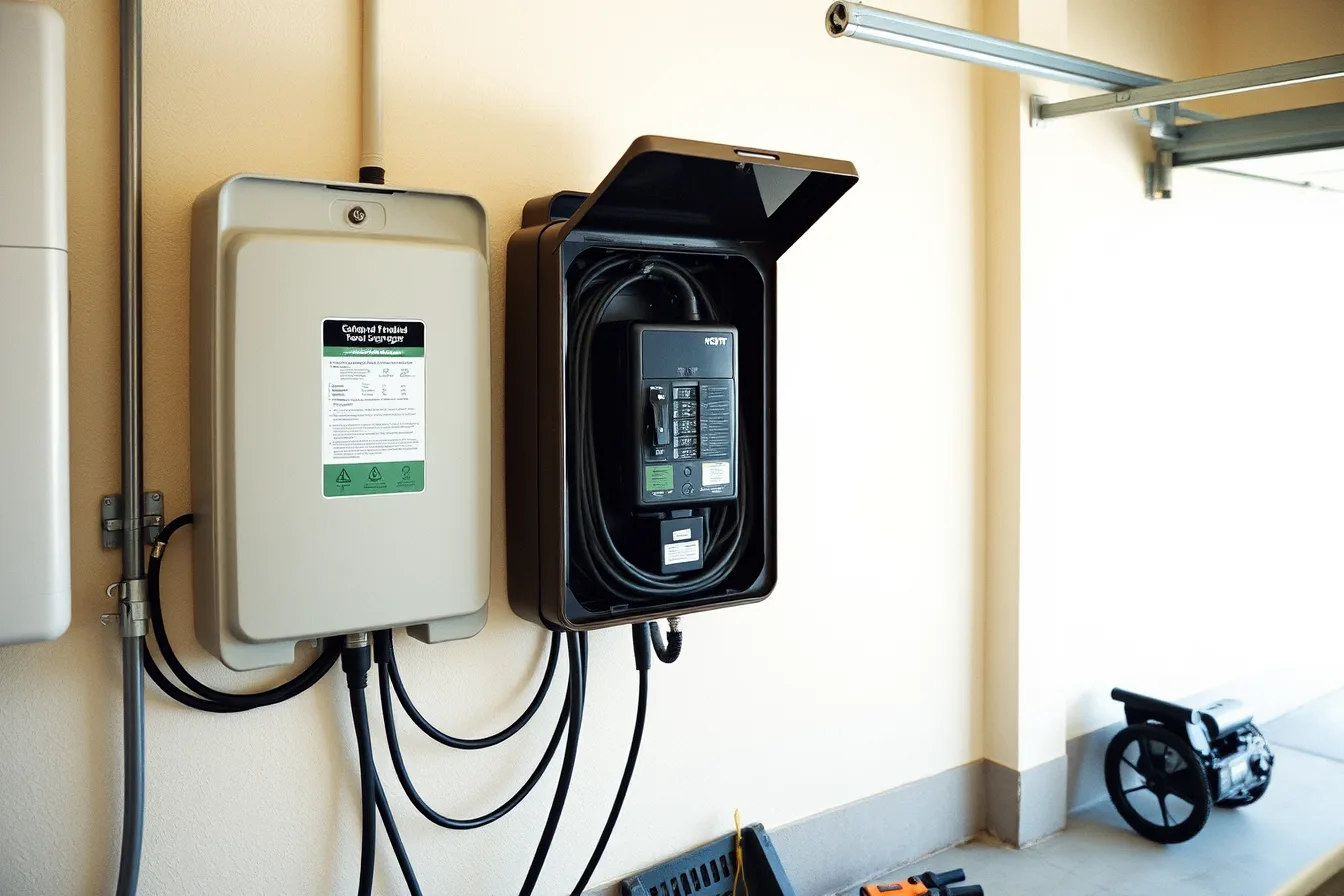
Strip away the marketing and an EV charger installation is a simple thing. Somebody runs a new circuit from your electrical panel to a point near where the car parks, and puts a device on the end that talks to the car and controls the flow.
That is genuinely it. The complexity is not in the charger. It is in whether your building can carry another large load, and in proving to an inspector that the new circuit is safe.
Step one: what can the panel take
An electrician opens the panel and works out what capacity is actually spare.
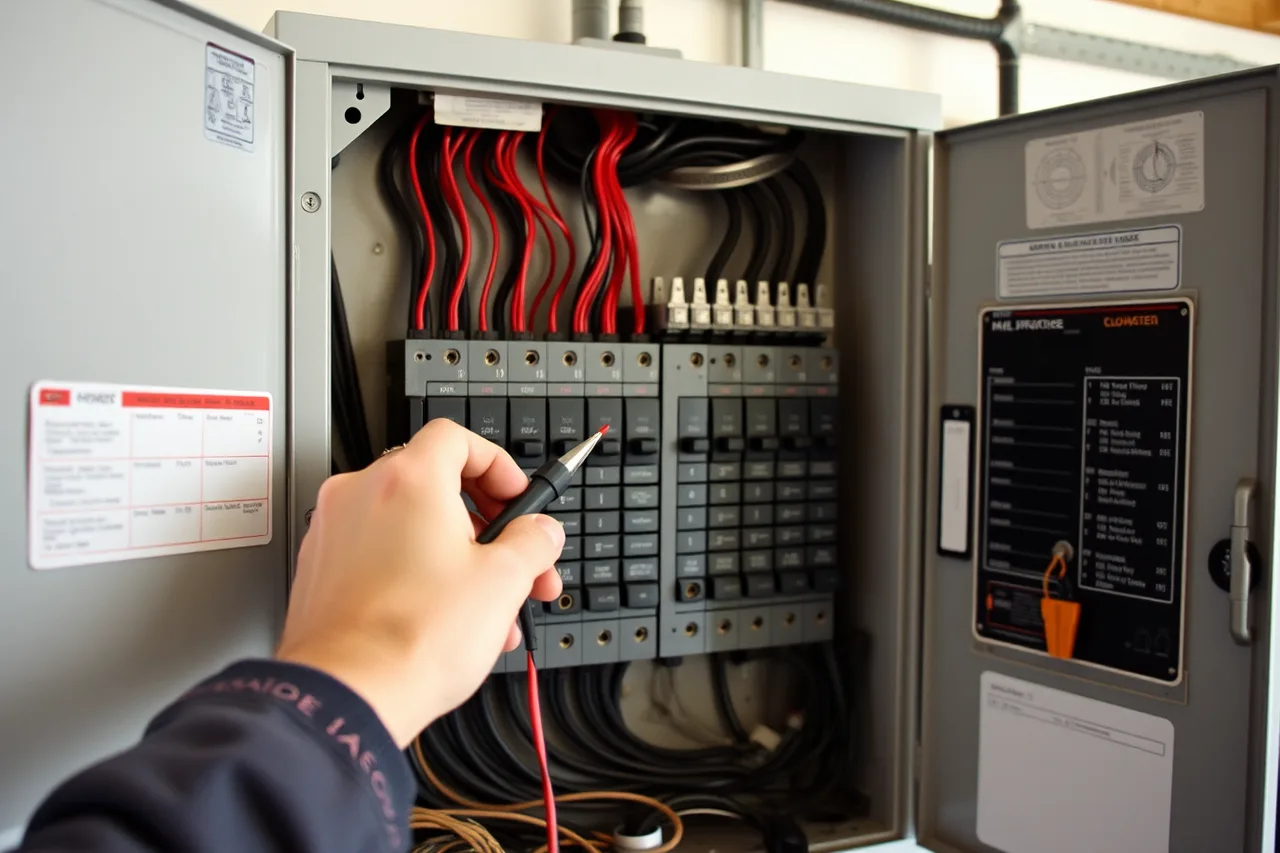
This is not a matter of counting empty slots. An empty slot means there is physical room for another breaker, not that the service can supply what you would connect to it. A panel can be full of space and short of capacity.
Charging is what the electrical trade calls a continuous load, meaning it runs at close to its full draw for hours rather than in bursts like a kettle or a dryer. Circuits for continuous loads have to be sized with headroom, so a charger nominally drawing a given current needs a circuit rated higher than that number.
If the panel cannot take it, there are three answers: a smaller charger, load management so the charger backs off when the rest of the building is busy, or a service upgrade. The last is the expensive one, and it is worth pricing the first two before accepting it, because load management often serves the same cars without new service.
Step two: where does the wire go
The electrician works out a route from panel to parking space.
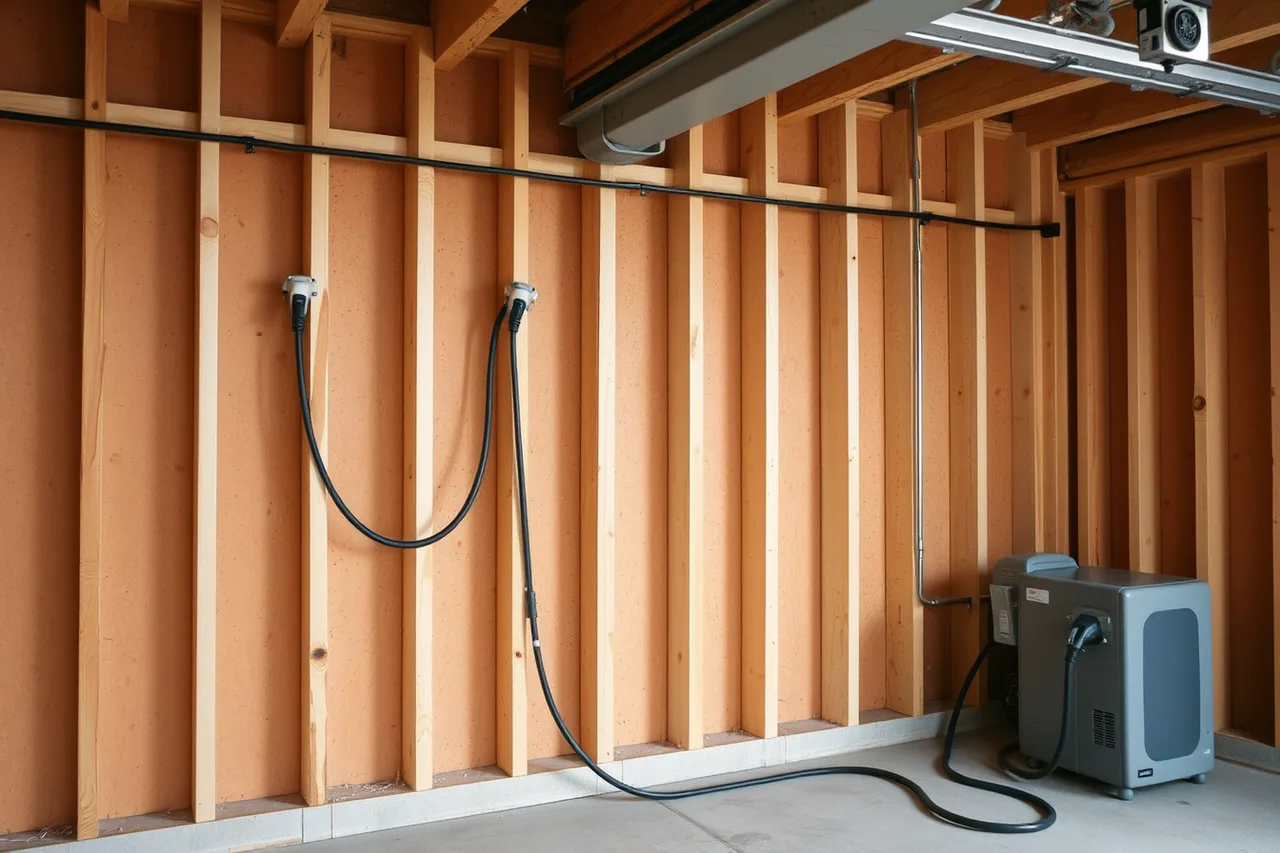
This is where the cost lives. A run through an unfinished garage wall is cheap. A run that crosses a finished ceiling, passes through a fire-rated wall, or goes under a driveway is not, because it brings core drilling, fire-stopping, trenching and making good afterwards.
Distance matters twice over: more cable, and heavier cable, since long runs need thicker conductors to avoid losing voltage along the way.
Step three: the permit
Almost anywhere in the United States, adding a circuit like this requires an electrical permit.
People treat this as a formality to be avoided. It is the opposite: it is the only point at which somebody independent of the person who did the work checks that it was done correctly. Unpermitted electrical work also surfaces later, at a home sale, an insurance claim or a subsequent permit application, and it surfaces expensively.
What the permit requires varies by jurisdiction, and passing it settles code compliance and nothing else on the list of things that can govern an installation. Some want a full plan set with load calculations; others accept a simple application for a single residential circuit. Your electrician should know, and if they do not, that tells you something.
Requirements are increasingly written into building codes rather than left to local practice. Code bodies have been formalizing how charging provisions appear in new construction and renovation.
The International Code Council's strategy report on electric vehicles and building codes sets out how those provisions are structured. That context explains why your jurisdiction asks for what it asks for.
Step four: the actual installation
Usually the shortest part. A straightforward residential job is often a single day: pull the cable, fit the breaker, mount the unit, terminate, test.
Complications that extend it are almost always physical rather than electrical. A route that turns out to be blocked, a panel that needs replacing, weather stopping outdoor work, or a part that has not arrived.
Step five: inspection and handover
An inspector visits and checks the work against the code your jurisdiction has adopted. If it passes, the permit is closed. If not, the electrician corrects and it is re-inspected.
Then the handover, which is the part people skip and regret. Get the breaker location and its rating, the circuit identifier, the unit's serial number and model, the warranty terms and start date, and the electrician's contact details. Photograph the installation before anything is closed up.
For a shared building this record matters more, because the person who commissions the work is rarely the person who has to fix it three years later. It is the file a maintenance schedule is built on.
How long the whole thing takes
The labor is short. The calendar is not.
| Stage | Typical driver of delay |
|---|---|
| Survey | Scheduling an electrician |
| Utility contact | Their queue, not yours. Longest single item if a service change is involved |
| Permit | Plan review, days to weeks depending on jurisdiction |
| Equipment | Lead times, worse for switchgear than for chargers |
| Installation | Usually a day or two |
| Inspection | Scheduling, plus any re-inspection |
Anyone promising a fast turnaround is describing the installation day and ignoring everything around it.
Where the rules differ, and how to find yours
Requirements vary a great deal between states, and increasingly between cities. Rather than trusting a general article, including this one, pull the record for your own jurisdiction. The Alternative Fuels Data Center maintains state-by-state data on charging laws and requirements that shows what your state has actually adopted rather than what is typical.
For a shared building the whole sequence is longer and involves more parties. The planning order for a multifamily project covers that version, and the installation sequence in a shared building shows where the extra steps appear.