
Guides
EV charging demand charges multifamily: five records, five steps
EV charging demand charges multifamily: a billing-period review in five records and five steps, with named owners for every open item.
What to take away
- An EV charging demand charges multifamily review is a billing-period records exercise. It does not calculate a charge or set a resident price.
- Every packet holds five recordsbill, rate material, meter map, charging-service map and open-items log.
- The steps run in ordertrigger and scope, packet assembly, map update, control evidence, closeout.
- Every open item carries one named owner and one due date.
- Retention follows the utility and the property's records schedule, not one national number.
The review question and the decision owner
Write the question at the top of the review file before anyone opens a bill for the current billing cycle. A workable question names the account, the billing period, the charging group and the decision owner. Add one sentence on what the review will not decide.
Most first questions are modest. Which meter and bill record concern this charging group? What is missing before the property answers a resident's cost question?
A priority record sets the order of work, so the meter link is settled before anyone argues about dollars.
Review question and decision owner
| Open item | Owner | Evidence needed |
|---|---|---|
| Meter relationship | Property operations | Bill page showing the meter identifier |
| Tariff treatment | Utility account contact | Current rate schedule |
| Contract terms | Qualified attorney | Signed agreement |
| Installed behavior | Provider and authorized reviewer | Dated test record |
The five-record billing-period packet
Build one packet per billing period. Keep originals in the property's authorized system. The packet is an index, not a replacement.
| Record | What to capture | Why it belongs |
|---|---|---|
| Bill or invoice | Account reference, period, meter reference, issue date, complete pages | Identifies the record under discussion |
| Rate material | Version or effective date, and the source | Shows which document staff consulted |
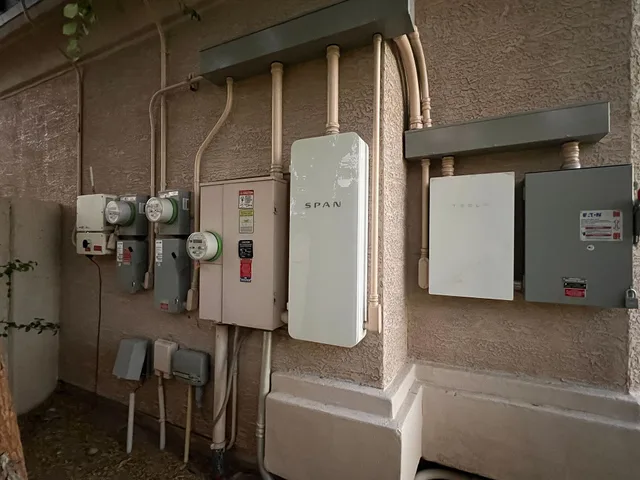
| Meter map | Utility meter, building meter, submeter, monitored point | Ties a billing record to physical service |
| Charging-service map | Charger group, network account, operator, billing provider | Shows which service may be relevant |
| Open-items log | Question, owner, requested evidence, due date | Keeps uncertainty visible |
Never strip context from a bill line. A screenshot may drop the period date, the account identifier or an adjustment. Save the original, then note the exact line under review.
The charging-service map should match the provider scope the property recorded when it requested service.
Bill-period packet contents
- Bill or invoiceaccount, period, meter, pages
- Rate materialversion or effective date, source
- Meter maputility, building, submeter, monitored point
- Charging-service mapgroup, network, operator, billing
- Open-items logquestion, owner, evidence, due date
The five steps of the billing-period review
Run the same sequence whenever a new bill, utility notice, configuration change or resident question arrives.
- Trigger and scope.Record the event, date, account, billing period and decision owner. Write the one question the records can answer.
- Packet assembly.Collect the five records above. Mark any missing item in the open-items log with an owner and a due date.
- Map update.Trace utility meter, submeter, charger group, network account and billing provider. Label each link confirmed, reported or unverified.
- Control evidence.Capture the equipment group, setting name, configuration version, account owner and support route. Add any test condition with its observed result.
- Closeout.Write a dated note with confirmed facts, open questions, the next check date and its owner.
The sequence does not calculate charges. It makes an incoming record traceable.
Five-step billing-period review
- Save sourceaccount, meter, billing period
- Compare against current meter and service maps
- Write what material confirms and what it does not
- Route unresolved issues to the owning organization
- Log action, response, decision, next check date
Example: a closeout note for one billing period
A completed closeout note can be four lines long. Here is one.
Trigger: July utility bill for account 4471, received 12 August. Confirmed: the bill covers 1 to 31 July and lists meter M-8821. The parking submeter read matches the provider export. Open: the Building C charger group is not tied to meter M-8821. Owner: property operations. Due: 5 September. Next check: 8 September, same owner.
A closeout record filed beside the packet keeps that note findable a year later.
Add one number for scale.
Example closeout note
| Item | Illustrative value | Note |
|---|---|---|
| Commercial demand charge | $10 to $20 per kW of monthly peak | Typical planning range, not a quoted tariff |
| Charging peak example | 40 kW | Site dependent |
| Resulting monthly band | Four figures | Confirm against the rate schedule |
The DOE energy-management guide defines demand as a charge on the maximum rate of use. That is why the meter and the billing period come first.
One example of the rate material a packet may need is Bear Valley Electric Service's rate schedule TOU-EV-3, which the utility proposes to expand to EV charging stations up to 1 MW in its general rate case before the California Public Utilities Commission. In California, the California Public Utilities Commission oversees retail rates, so a specific schedule like this is the kind of document the review should request from the utility.
On most such schedules the demand charge follows the highest 15-minute average use recorded over the billing period, which is why one evening when several residents plug in at once can set the month's demand line. Direct-current fast charging is more likely to trigger demand charges than Level 1 and Level 2 charging.
Who pays the demand charge
The meter map answers this before anyone argues about fairness. If the chargers sit on the house meter, the property pays whatever demand they add, and only resident fees can recover it. If the chargers have their own utility meter, the demand line is isolated on that account and the review can trace it to one charger group. If a charging network bills drivers per session or per kWh, the network's settlement report belongs in the packet beside the bill, so the property can see whether fees cover the demand line or the house account absorbs it.
Control evidence and resident communication
A charge-management setting is an operating fact only after the installed configuration is documented and a test is recorded. Capture the setting name, inputs, version and observed result.
Keep the test record apart from the tariff question. A test can show a charger responded to a documented setting, not that it produced a demand charge or a resident fee. Load-management measures such as scheduled charging, power sharing and current limiting can reduce a site's peak, but the review records what is installed and tested; it does not calculate the charge. Where chargers and software speak OCPP, the open communication protocol between charging stations and charging management systems, its smart charging support for load balancing is the setting to document.
Resident material should describe access and the support route. It should not promise a demand-charge outcome.
Retention and the records owner
Retention periods vary by state, by utility and by the property's own policy. Ask the utility and the records owner for the applicable schedule.
Federal tax rules set a floor for the bills themselves, since they support the property's expense deductions. IRS guidance says to keep records for 3 years if none of its longer situations apply, and to keep records relating to property, such as the chargers and their invoices, until the period of limitations expires for the year in which you dispose of the property.
The National Archives records-management guide treats records as evidence of actions and decisions.
Reopen the map when a meter is replaced, a provider migrates or a billing process is revised. A recurring work log keeps each event under its original history.