Guides
Part of EV outlet vs hardwired charger for apartments: a 2027 service model guide
Apartment EV outlet inspection checklist: approving a cord
An apartment EV outlet inspection checklist for resident cords: compare each cord with the approval record, watch one session and decide to approve or pause.
A resident's cord is the part of an apartment EV outlet that changes most often, so it is the part to check at every inspection. The check is a comparison against a written approval, not an electrical test. Building staff observe, record and escalate; they do not perform electrical work.
What to take away
- Compare the cord, plug and settings with the approval record before the resident charges.
- Reject any undocumented splitter, extension cord, field repair, damaged plug or unapproved adapter.
- Treat a new cord, vehicle or portable charger as a new review.
- Watch one normal session, then approve, pause or escalate.
Start from the outlet's approved configuration
A cord can only be approved against something. Match the stall number, outlet label, circuit reference, approved voltage and current, receptacle type, enclosure and assigned resident to the accepted record first.
For a 240-volt Level 2 outlet the receptacle may be a NEMA 14-50 or NEMA 6-50, and the record should name the one the property approved. Stop if a label conflicts with the record. Do not rewrite a label simply to make the information agree.
Installations in the United States fall under NFPA 70, the National Electrical Code, whose Article 625 covers electric vehicle power transfer systems. The authority having jurisdiction, usually the city or county building or electrical department, issues the permit and signs off the inspection, so ask for that record before the cord check begins. It belongs with the installation steps the property already followed.
Compare the cord with the approval record
For a resident-owned cord, compare the current item with the approval record the property holds for that resident. Renters bring their own gear, and options for renters shows why that record matters. Work down the list and tick each line only when the cord in hand matches the paper.
- Manufacturer and model match the record
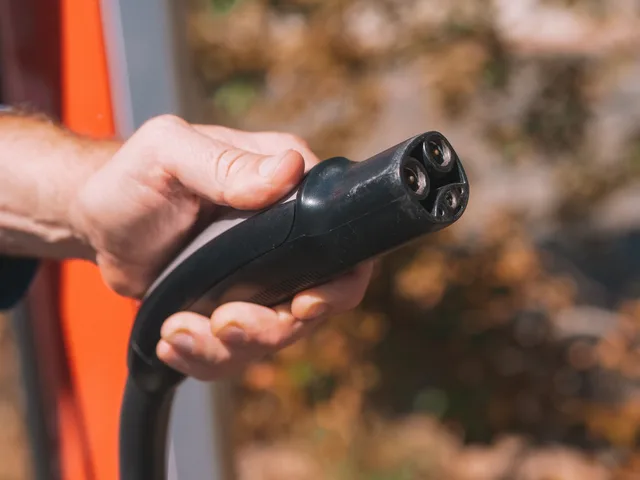
- Plug and vehicle connector match, including whether it uses a SAE J1772 connector
- UL listing mark appears on the cord and the charging equipment
- Configured current setting matches the approved setting
- Certification evidence required by the property is on file
- Any adapter in use is a permitted adapter
- Cable length and storage method are acceptable
- Visible condition and environmental suitability are acceptable
A listing mark is one line on the list, not the whole approval. A cord can carry a mark and still be the wrong cord for the outlet in front of you.
The Department of Energy's EVSE training for federal fleets says that assessing an installation means understanding EVSE compatibility and power ratings. It does not decide whether an individual resident's cord is approved. That decision stays with the property's own record.
Reject what the record does not cover
Reject an undocumented splitter, extension cord, field repair, damaged plug or unapproved adapter. Nothing about a cord's appearance makes up for a missing approval.
If a resident changes vehicles or cords, require a new review before the stall returns to normal use. A different portable charger is a new equipment approval too. Confirm compatibility and the written requirements before it is used at the assigned outlet.
Level 1 cords raise the same questions in a different form, which is why guidance on when Level 1 charging works in apartments sits beside the cord review.
Watch one normal session
Have the authorized resident connect and disconnect the approved equipment while staff watch. Observe plug seating, cable support, connector reach, startup, the expected setting, a normal stop and storage.
The cable should not cross a vehicle path, a pedestrian route, an adjacent stall or an access area. Note the stall, the date, the person present, the equipment identity, any fault and the next action. A note that says only "started normally" is weak.
The Occupational Safety and Health Administration's electrical overview says that many workers are unaware of the potential electrical hazards in their work environment. That is why the observer's role is limited: look, record and stop. Do not tighten, clean, reset, open or test the equipment beyond the property's procedure.
Decide: approve, pause or escalate
Close the check only when the asset record, visible condition, cord approval and observed session agree. Otherwise label the exception and send it to the assigned service contact.
| Cord situation | Decision |
|---|---|
| Cord and outlet agree with the record | Record the check and keep the current assignment |
| Cord changed but the outlet appears normal | Pause charging until the new cord is approved |
| Undocumented splitter, extension cord or adapter | Reject the cord and tell the resident why |
| Outlet label conflicts with the record | Escalate the discrepancy for review |
| Heat, odor, damage, moisture or repeated trips | Follow the emergency or service procedure and do not improvise a repair |
An outlet that is paused is not a failed inspection. It is an open item with a named owner, which is a better state than a cord used on trust.
Where the property uses a maintenance plan, set the review rhythm there, and let the plan name who answers when a cord is paused.
Keep the approval evidence
Keep the inspection date, the asset and stall identifiers, the observer's role, the visible findings, the cord identity, the session observation, any photographs the property allows and the decision together. If the resident or the equipment changes, open a new dated record.
That makes it clear whether the asset is being reassigned under the same approved condition or needs another review. The National Archives guide to basic records-management concepts explains that records need management through defined life-cycle activities. It does not prescribe a private property's system.
Condo boards that route cord approvals through the board can see how condo EV charging rules and approvals fit with the property's own procedure, and new staff can read how installation works to see why each line exists.
Common questions
Does a UL mark prove the cord is approved?
No. The mark is one item on the list. The cord must also match the manufacturer, model, setting and permitted adapters in the approval record.
Can staff plug in the cord to test it?
No. Staff observe an authorized resident connecting and disconnecting the approved equipment. Electrical testing, repair or work inside energized equipment belongs to a licensed electrician.
What if the resident brings a different portable charger?
Treat it as a new equipment approval. Confirm compatibility and written requirements before it is used at the assigned outlet.