Guides
Part of EV outlet vs hardwired charger for apartments: a 2027 service model guide
Resident-owned EV cord or property charger: how to pick before purchase
Compare resident charging cords and property EV chargers in 2027 across approvals, cable custody, daily use, turnover, support, billing, and replacement.
What to take away
- Resident-owned EV cords (Tesla Mobile Connector, Grizzl-E Mini Connect, Splitvolt) need an exact approval, inspection, storage, and move-out process.
- Property chargers (ChargePoint CP6000, Wallbox Pulsar Plus, Enphase IQ EV Charger) need defined ownership of settings, accounts, cables, repairs, and data.
- Both models need a clear response when a vehicle, cord, resident, or parking assignment changes.
- Choose the model that leaves the fewest ownership gaps during normal use and failure.
Define the resident-cord model
The property provides an approved outlet or connection point, and the resident supplies the cord and adapter. The lease should name the evidence the resident submits, the allowed plugs, the storage method, and who removes the cable at move-out.
Tesla sells the Mobile Connector for about $250. It draws 32 amps on a 240-volt circuit and ships with a NEMA 5-15 adapter; extra adapters cost about $45 each.
The Grizzl-E Mini Connect is a 40-amp portable that typically sells for about $400. Lectron's Level 2 cord runs $250 to $350 in most markets, and Splitvolt builds models for NEMA 10-30 and 14-30 dryer outlets at roughly $300 to $400.
An older Clean Cities technical plan for Texas River Cities distinguishes portable and hardwired EVSE and records how product details such as power, cable, and installation type can differ. It is planning material, not a current approved-product list. Record the exact cord and outlet combination at the apartment, not a generic label.
Define the property-charger model
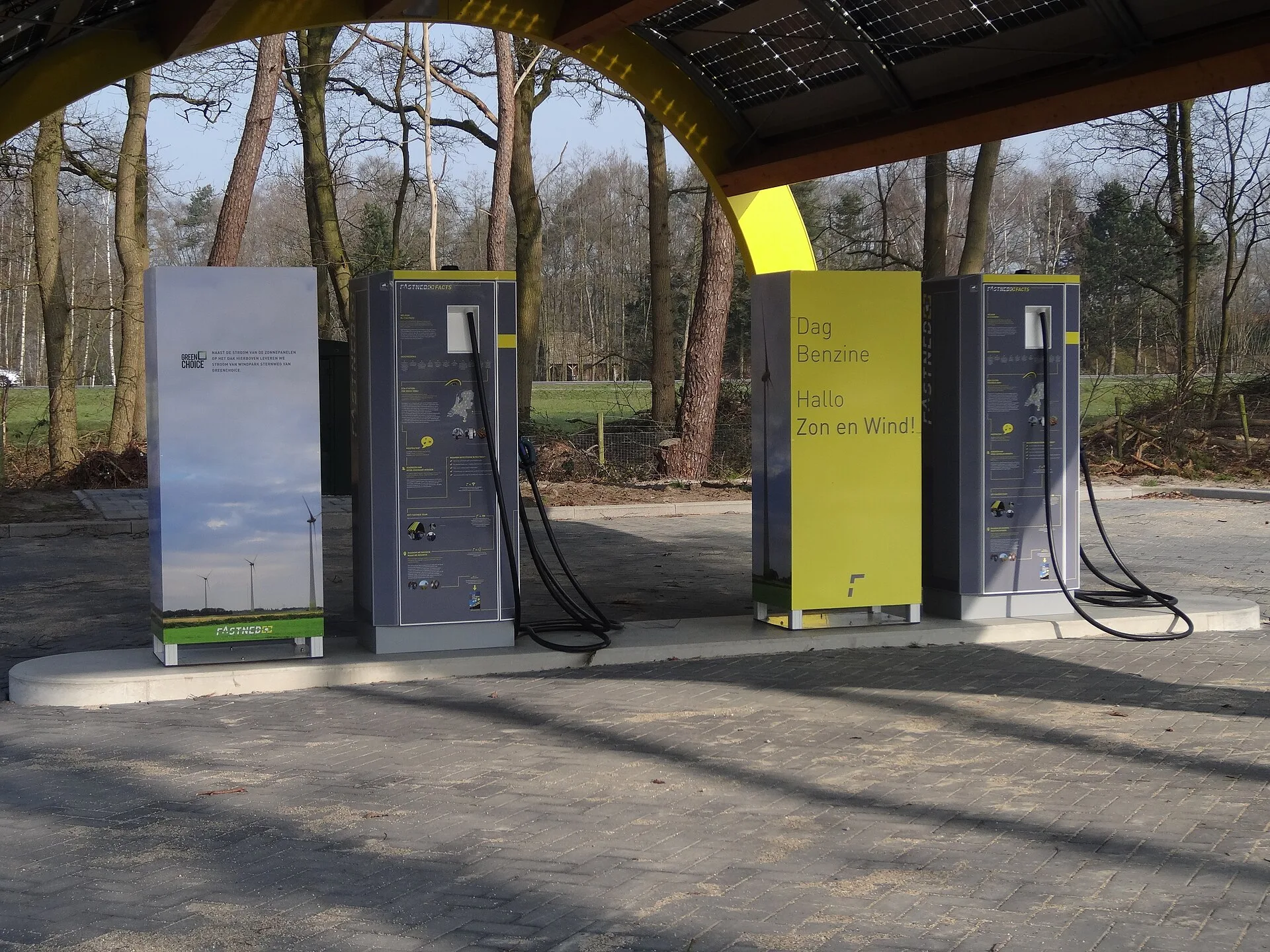
The property selects the charging equipment and normally controls the cable, configuration, service relationship, and user access. On a networked unit, give administrator credentials, resident enrollment, and billing to a named role. Data exports, alerts, and the renewal decision need an owner too.
Installed ChargePoint CP6000 ports typically run $5,000 to $9,000 each in most markets, equipment and labor included. Wallbox sells the Pulsar Plus for about $700 to $1,000 and the Commander 2 for roughly $1,700 to $2,500.
Residential-grade hardware costs less. The Enphase IQ EV Charger, the former ClipperCreek line, runs about $1,000 to $1,300 hardwired. Emporia's 48-amp charger sells for about $400 to $500, and the Tesla Wall Connector is about $420 with a 48-amp maximum.
A smart charger can outlive its maker. Enel X Way shut down its North American operations in October 2024, and the JuiceBox app stopped working. A unit that meets OCPP 1.6J or 2.0.1 lets the property change network providers without replacing the hardware.
This model can standardize the visible equipment. It does not eliminate responsibility. A charger can still become unavailable because a cable is damaged, an account was not transferred, a modem loses service, a payment rule is unclear, or nobody has authority to approve the repair.
The Department of Energy's EVSE infrastructure training frames charging equipment inside a broader facility-infrastructure system. It supports documenting which party controls each physical and operating part of the service. It does not set an apartment property's ownership model.
Compare the handoff points
Resident-owned cord
- Move-in
- Review and approve the exact cord and settings.
- Vehicle change
- Recheck connector, current setting, cable path, and adapters.
- Damage report
- Identify whether the cord, outlet, or parking condition is involved.
- Move-out
- Remove the cord, inspect under the safe procedure, and close the assignment.
- Hardware example
- Tesla Mobile Connector, Grizzl-E Mini Connect, Splitvolt dryer-outlet units
- Who buys it
- Resident, typically $250 to $400
- Standards to check
- UL 2594 listing, SAE J1772 connector, GFCI at the receptacle (NEC 625.54)
- Billing and data
- Resident pays the utility for the outlet
Property-owned charger
- Move-in
- Enroll user, explain access, and confirm the connector reaches.
- Vehicle change
- Confirm compatibility and update the user record.
- Damage report
- Secure the equipment and contact the assigned service path.
- Move-out
- End access and billing, inspect the cable, and preserve the event record.
- Hardware example
- ChargePoint CP6000, Wallbox Pulsar Plus, Enphase IQ EV Charger
- Who buys it
- Property, typically $5,000 to $9,000 installed per networked port
- Standards to check
- UL 2594 listing, OCPP 1.6J or 2.0.1, ENERGY STAR certified models
- Billing and data
- Property or network operator bills the driver and holds the data
The right model makes each handoff predictable. If staff must guess whether the cord belongs to a former resident or the property, the process is incomplete. Give each row a named contact, not a department.
Resident cord vs property charger
Resident-owned cord
- Who buys it
- Resident, $250-$400
- Standards
- UL 2594, J1772, GFCI
- Billing
- Resident pays utility
- Move-in
- Approve exact cord
- Move-out
- Remove cord, close assignment
Property-owned charger
- Who buys it
- Property, $5,000-$9,000
- Standards
- UL 2594, OCPP, ENERGY STAR
- Billing
- Property or network bills
- Move-in
- Enroll user, confirm reach
- Move-out
- End access, inspect cable
Test the daily experience
Use a representative vehicle and walk through arrival, connection, charging, disconnection, and departure. Check cable reach, plug seating, storage, and weather exposure. Then check lighting, parking orientation, access, and the route around the vehicle. Repeat with a second vehicle if the stall will serve more than one resident over time.
Charging speed by outlet
- NEMA 5-15, 120V3 mph
- 40-amp cord, 240V25-30 mph
A NEMA 5-15 adapter on a 120-volt outlet adds roughly 3 miles of range per hour, which rarely covers a daily commute. A 40-amp cord on a 240-volt circuit adds roughly 25 to 30 miles per hour. Match the cord to the outlet the property will approve, not the fastest one on the market.
For the cord model, test what happens when a resident forgets to remove equipment, changes vehicles, or presents an unfamiliar adapter. For the property model, test a lost access credential, an unavailable network, a failed payment step, and a damaged connector. The better option is the one the property can support without improvised decisions.
Set a replacement rule before purchase
List the responsible party for replacement, the approval required, the evidence required, the budget owner, and the condition for returning the stall to service. That list should cover the portable cord, plug, outlet enclosure, and attached cable. Add the charger, the network device, and the access credential.
Replacement cost ranges
- $250-$700Resident cord replacement
- $1,000-$6,000Networked charger unit plus labor
- June 30, 2026Federal 30C credit ended
Budget from real numbers. Replacing a resident cord runs $250 to $700.
Replacing a networked commercial charger typically runs $1,000 to $6,000 for the unit plus labor. The federal 30C alternative fuel refueling credit ended for property placed in service after June 30, 2026 under the 2025 tax law, so 2027 budgets should not count on it.
Do not use a replacement event to quietly change the service model. A higher-current cord, a new charger feature, or a new payment system should receive the same formal review as the original installation.
The Occupational Safety and Health Administration's electrical topic page describes electrical hazards and related safety resources. It supports treating damage, electrical conditions, and equipment access as issues for the appropriate safety process. It does not establish whether a particular cord or charger is acceptable at a property.
Keep the ownership decision current
Save the selected model, equipment approval, assignment rules, and maintenance responsibilities together. Add the support contacts, the replacement rule, and the change history.
When a resident moves, staff changes, a cord is replaced, or a network contract changes, review the affected handoff point instead of assuming the original responsibility still applies. A reliable program makes ownership visible before an incident occurs.
The National Archives guide to basic records-management concepts explains that records require management through defined life-cycle activities. It supports retaining the ownership decision and later changes together. It does not prescribe a private property's resident-equipment policy.
Common questions
Can a resident leave a portable charging cord after moving out?
Only if the property's written agreement says it becomes property equipment and staff formally accept it. Otherwise, require removal and close the related assignment. Accepting a used cord means taking on a $250 to $400 asset and the liability that comes with it.
Does a property-owned charger eliminate equipment approval?
It removes resident selection of the primary charger, but not the need to review vehicle compatibility, access, cable use, billing, and changes to the approved configuration.
Which option is easier to manage?
The easier option is the one that matches parking behavior and the staff capacity to manage it. A simple outlet can become difficult without cord controls; a smart charger can become difficult without account and service ownership.
What does a resident cord cost to set up?
A UL-listed portable cord runs $250 to $700. The outlet work is the variable: a licensed electrician installing a NEMA 14-50 receptacle on a dedicated 240-volt circuit typically costs $500 to $1,500 in most markets, and NEC 625.54 requires GFCI protection for that receptacle.