Guides
Apartment Level 2 charger care plan: who owns service?
Apartment Level 2 charger care plan: who owns service and repairs under each ownership model, routine care, contract terms and the resident route.
An apartment Level 2 charger care plan is the property team's record for keeping a shared charging service organized after it is in use.
It is not a repair manual. It does not tell unqualified staff how to open equipment, test electrical parts, or override a provider. Its job is to name current owners, set a routine for observations and reports, protect the service agreement, and give residents a clear way to get help.
The plan should fit the actual property. A garden apartment with two wall units needs a different schedule from a large parking garage with networked stations, billing support, multiple access groups, and a third-party service provider. In both cases, the plan should distinguish everyday care from a condition that requires the responsible provider or a qualified professional.
What to take away
- Build the plan around current asset, service, and contact records.
- Separate routine observations, resident reports, provider support, and qualified technical work.
- Give each service window a decision owner and a resident-message owner.
- Track open reports until the responsible source provides a current outcome.
- Review the plan after turnover, a contract change, or a recurring service issue.
Start with a responsibility map
An equipment label does not tell a property who is responsible for every part of a charging service. The owner, association, management company, charging network, electrician, installer, billing provider, and warranty administrator can have different roles. The current contract and service agreement should govern those boundaries.
Create a one-page responsibility map before setting a schedule. It should list the charger locations and identifiers, the current asset owner, the resident support channel, the provider support channel, the authorized decision owner, and the location of the governing documents. Keep account credentials and resident payment information out of the map.
The Federal Highway Administration's operations and maintenance plan template separates a high-level operating plan from detailed supplier procedures. It emphasizes responsibilities, resources, periodic reporting, and preventive and reactive maintenance. Review the FHWA plan template.
It is not an apartment-charger rule. It is a useful model for keeping a property's plan focused on ownership and coordination rather than trying to replace a provider's technical instructions.
Who owns service: it follows who owns the chargers
The short answer is that the party that owns the chargers owns service, unless a signed agreement moves it. Three arrangements cover most apartment and condo sites:
- Property-owned, non-networked chargers.The owner or association owns service. A licensed electrician does repairs, and once the warranty ends the property pays for them: Level 1 and Level 2 chargers may have a fixed-length warranty, but the owner is then responsible for repair costs after the term ends.
- Property-owned, networked chargers.The property still owns the hardware and the repair decision. The charging network runs the software, payments and remote status, and most networks also offer a maintenance plan for an additional annual fee; if the property buys one, the plan's terms say what the network fixes.
- Provider-owned chargers under a service agreement.The provider owns service and repairs within the agreement. The property keeps the parking spaces, access rules and resident communication.
Whichever applies, write it into the plan in plain words. Federal guidance from the Alternative Fuels Data Center says it is important to establish responsibility for maintenance costs and determine if the site host, charging network, or installer is responsible, and that maintenance contracts should include a response time, a time for a given repair, and an overall uptime requirement. Those three terms are what the decision owner checks before approving a service window.
Work on the circuit or the charger's wiring is electrical work under Article 625 of the National Electrical Code and the local permit rules, so it always sits in the authorized-service lane below, whoever owns the chargers.
Responsibility map
| Role | Care-plan responsibility | Not responsible for |
|---|---|---|
| Property coordinator | Maintains the plan, contacts, and current status record | Diagnosing an electrical or software cause |
| Decision owner | Approves agreement-covered work or escalation | Making unverified resident promises |
| Resident-message owner | Shares current service facts and support route | Giving technical advice |
| Provider contact | Confirms provider-reported status and next step | Changing property policy without authority |
| Qualified service party | Performs work within its authorization | Rewriting the property's resident policy |
Set three care lanes
The most useful plan has clear lanes, each with a different outcome.
Three Care Lanes
- Routine observation: note location, date, condition
- Provider or resident support: app, payment, access
- Authorized technical service: agreement or provider directs
- Record support route and provider reference
- Do not label cause or promise repair
Lane one: routine property observation
This lane covers what staff may observe without touching equipment or making a technical conclusion. For example, staff may note a blocked parking space, damaged signage, litter, a resident report, or a visible condition that the property's existing procedures say should be reported. Record the location, date, observation, and current support route. Do not label the cause.
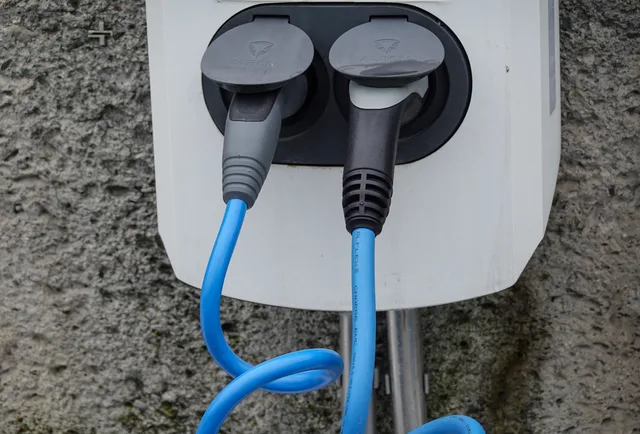
General maintenance for charging equipment includes storing charging cables securely to prevent damage, checking parts periodically, and keeping the equipment clean. For a Level 2 site that translates into simple rounds: the connector hung on its holster rather than lying on the ground, the cable undamaged and out of the drive aisle, the screen or status light readable, and the unit and its signage clean. Anything beyond looking and tidying goes to lane two or three.
Lane two: provider or resident support
This lane covers app, payment, access, network-status, and service questions that belong to the approved support channel. The property should give residents that channel and preserve the provider reference when one is available. A provider ticket is a record of a request, not proof that a repair, refund, or restoration has been approved.
Lane three: authorized technical service
This lane covers work that must be directed by the current agreement, provider, or qualified professional.
The care plan should say who may authorize a visit, who receives the report, and who updates the asset or service record after the responsible party confirms the outcome. It should exclude electrical steps, equipment access procedures, or instructions for bypassing normal service controls.
Build a calendar that reflects resident use
Use the vendor's current instructions and the applicable agreement to set the actual maintenance interval. The property plan can add a communication calendar around that interval. Mark known access constraints, parking restrictions, lease-turnover periods, weather limitations, and the usual resident notice route. If a provider requests a service window, identify the decision owner before posting any message.
Charger Care Calendar
- Planned provider visitRequest reference and authorized owner
- Resident reportDate, location, support route, provider reference
- Temporary limitationProvider status and next update point
- Contract or contact changeUpdated owner and effective date
- Annual plan reviewCurrent plan version and decision owner
Calendar reflecting resident use
| Calendar event | Property record | Resident-facing action |
|---|---|---|
| Planned provider visit | Request reference, scope, and authorized owner | Planned availability only if confirmed |
| Resident report | Date, location, support route, and provider reference if provided | Acknowledge the approved support route |
| Temporary service limitation | Provider-reported status and next update point | Current use information without a completion promise |
| Contract or contact change | Updated owner, support route, and effective date | Update published help information if it changes |
| Annual plan review | Current plan version and decision owner | No notice unless use instructions change |
Do not set calendar tasks just because another property uses them. A generic frequency can conflict with the manufacturer's current instructions, a service agreement, local requirements, or the property's staffing model. When the proper interval is unclear, record the question and ask the responsible source.
Make resident reports easy to route
Residents should not have to decide whether a report is electrical, contractual, software-related, or a parking issue. Give them a short reporting path that tells them what location detail is helpful, where account questions go, and when they can expect another update. Avoid collecting passwords, payment details, or other sensitive information in a property-maintenance email.
The response message should be specific but modest. It can say that a report was sent to the current service channel, that the property has no confirmed restoration time, or that the station's current status is being confirmed. It should not say the equipment is safe, unsafe, repaired, or covered by warranty without a responsible source.
Keep a service-window record
When a provider schedules work, create a simple record before the window starts. Include the request reference, site or asset scope, current decision owner, provider contact, expected resident effect, and the person responsible for the next message. At the end, add the provider's reported outcome and any pending follow-up owner.
Service-Window Record
- Request reference
- Site or asset scope
- Current decision owner
- Provider contact
- Expected resident effect
- Person for next message
- Provider-reported outcome
This record prevents two common problems. First, a planned visit is not recorded as a completed repair. Second, a resident message is not the only evidence of what the provider actually reported.
The record should point to secure source systems rather than copy confidential data into a shared spreadsheet. National Archives basic records-management guidance describes controlling information through its life cycle, a useful basis for retaining dated source references and corrections.
Plan for recurring reports without guessing the cause
Repeated reports about the same location may show that the property needs a clearer support route, a current provider review, a parking-policy update, or a verified service response. They do not establish a technical fault by themselves. Group the reports by location and date, retain the provider references, and ask the current owner what decision or service process applies.
If a report suggests a condition requiring the property's established safety or urgent-service procedure, use that procedure. The care plan is not an exception to it. It helps the property preserve the right facts and avoid issuing unsupported resident guidance while the responsible party responds.
The Department of Energy describes operations and maintenance as continuing elements of charging-infrastructure planning. See the Alternative Fuels Data Center overview. That supports keeping a current owner and service path for recurring reports, but it does not authorize property staff to perform technical work.
Review the plan after a change in people or contracts
Apartment teams change. A new property manager may not know a provider's contact path. A new leasing team may publish old instructions. A contract extension may change who approves work. Review the map and calendar after a management handoff, owner change, vendor change, major service event, or regular annual checkpoint.
Ask these questions:
Post-Change Plan Review
- Can coordinator find support route in one minute?
- Is decision owner still correct?
- Does notice template state only confirmed facts?
- Do service records identify outcome or next owner?
- Are sensitive records in approved system?
The resulting update might be a corrected phone number, a revised contact list, or a clearer handoff note. It should never be a guess about an equipment condition.
Make the plan part of apartment operations
The plan works only if people who receive a resident question can find it. Put the current support route in the leasing and property-operations handoff materials.
Give new staff a short explanation of the difference among four terms: resident report, provider ticket, provider-reported status, and confirmed outcome. That small distinction keeps a ticket number from becoming an accidental promise.
Keep the plan's public material short. Residents need the approved charging-use information, the support route, and any verified temporary notice. They do not need property team's contract history, internal decision path, or provider correspondence.
A property coordinator can maintain the full record while the resident message stays simple and current. The NIST Privacy Framework is voluntary guidance for managing privacy risk. It supports limiting a resident-facing record to information needed for its stated purpose.
When a staff member is unsure what to do, the right first step is to locate the current owner and support path. Escalating a documented question is better than improvising an answer about availability, cost, safety, or repair.
Common questions
Does a care plan replace the charger manufacturer's instructions?
No. Follow the applicable manufacturer's instructions, service agreement, and qualified provider process. The property plan organizes ownership, communication, and records around them.
Can leasing staff close a resident's report after forwarding it?
Only close the property record when the responsible source confirms the relevant outcome or the record identifies a current next owner and status.
Should the plan promise charger uptime to residents?
No. Use a current, verified service message. Do not promise availability or a restoration time that the responsible provider has not confirmed.
In this guide
- Apartment Level 2 charger care checklist: observe and routeA monthly walk checklist for apartment Level 2 charger care: what staff can see, what to record and which owner hears each observation.
- Apartment Level 2 charger care budget: who pays each line and what proves itHow providers, properties and residents divide the care costs of an apartment Level 2 charger, and which document supports each budget line for 2027.
- Apartment Level 2 charger care warning signs in service recordsApartment Level 2 charger care warning signs in service records include repeated failed sessions, fault codes, damaged connectors, heat, and breaker trips.
- Apartment Level 2 charger care records: a handoff guideApartment Level 2 charger care records capture EVSE details, service status, open work, and the access transfer and sign-off needed at handoff.