Guides
Part of A plain-English look at how EV charger installation works
How to plan a future-ready EV charger installation setup
Future-ready EV charging means spare conduit, spare panel slots and headroom you can prove on paper. Here are the provisions worth making now.
What to take away
- Future-ready is not a charger feature. It is spare conduit, spare panel slots and a load number you can show.
- Size the pathway for two or three circuits, not one.
- Do not buy extra charger output. The supply is the limit, not the box.
- Write the provisions into the electrical record.
- Decide the trigger for the next port now, so nobody has to redo the analysis later.
What the title is actually asking
"Future-ready" is a marketing word bolted onto chargers. No charger is future-ready. The building around it is, or is not.
The test: if a second port were needed in three years, what would have to be torn up? If the answer is a wall, a trench or a finished ceiling, the provision was skipped.
The provisions worth making
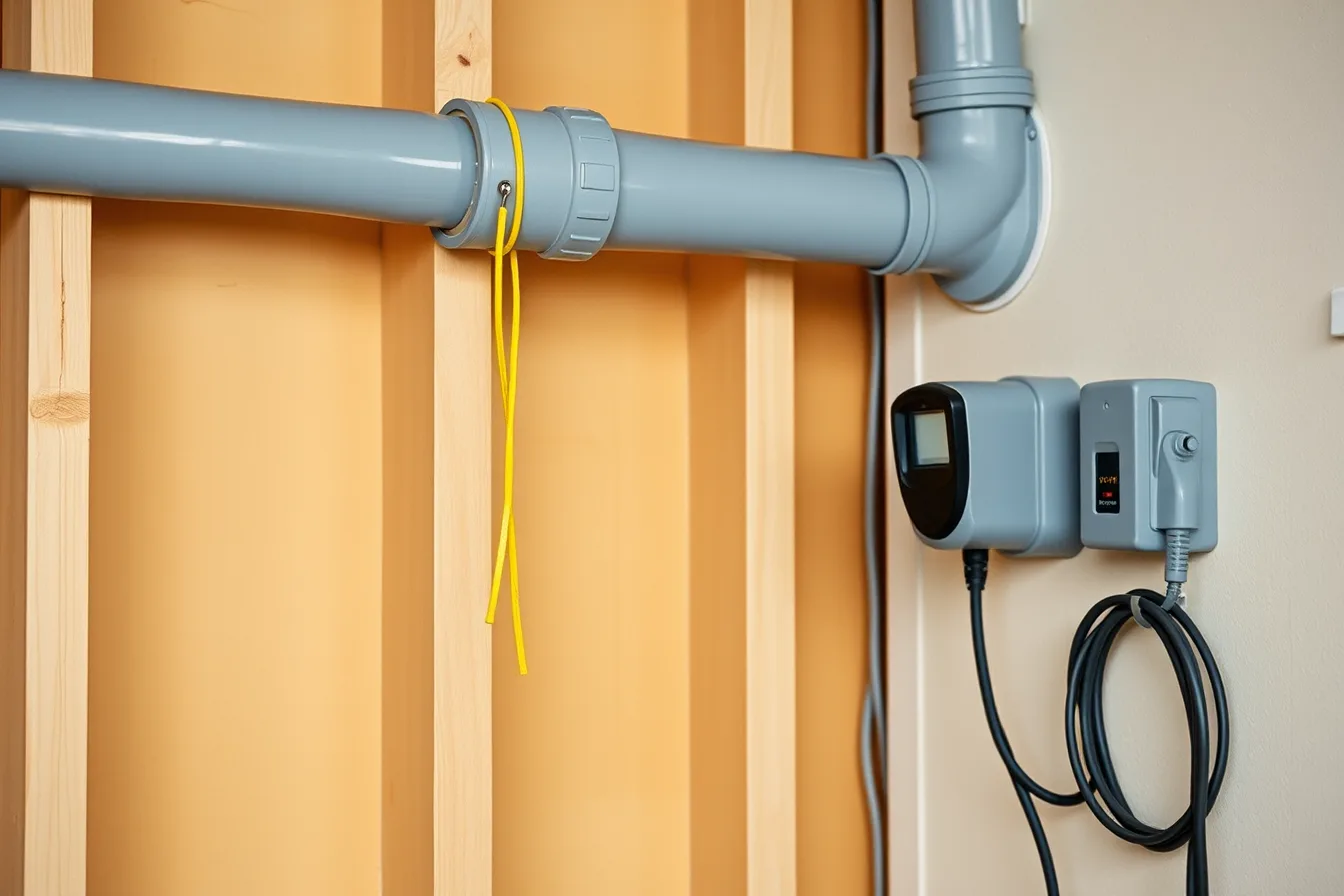
Conduit sized for more than one circuit. The price gap between conduit for one circuit and conduit for three is small. For a short shared-parking run, upsizing from 3/4 inch to 1 inch conduit typically adds $50 to $200 in material and labor. For three 60 amp circuits, use 1.25 inch conduit. Reopening the same wall, ceiling or trench is not.
Digging once rather than twice is the highest-value decision in shared parking, and it is made at the first pour.
A pull string left inside it. A pull string costs a few dollars in material. Turns a future cable pull from a hard job into a routine one.
Two panel positions kept genuinely spare. Reserved panel capacity adds no material cost if the panel has space. Two spare 240 volt breaker positions cost the price of the breakers, often $40 to $120 each for common 40 to 60 amp types. If the panel is full, a subpanel or service upgrade can run into the thousands.
Spare only counts if nobody fills them. Label them and note in the panel schedule what they are reserved for.
A written load number. Ask the electrician what the service could carry in total, not just whether it carries this charger. Have that figure recorded on the calculation sheet, signed by whoever prepared it.
A mounting position that suits two units. If a second bay would ever be served, check now that the first unit does not block it.
A route that crosses nothing permanent. A pathway through a wall you may later tile, or under paving you may later replace, becomes a future obstacle.
A worked example of the arithmetic
Say the service has 100 amps of headroom after existing loads. Each charger is a 48 amp unit on a 60 amp circuit. Diversity lets you count two at once. The number of ports is (100 x 2) / 48 = 4.16, so four ports.
If you want three later, the provision is conduit for three 60 amp circuits and three panel positions, not a bigger charger.
The load calculation itself is not yours to sign: it belongs to a licensed electrician or professional engineer, and the authority having jurisdiction sets what the permit requires.
The provisions that usually waste money
A charger rated above what the circuit or the car can use. A higher-rated unit does not make the building readier. Overnight parking rarely benefits from the extra output. The same arithmetic is why Level 1 is genuinely sufficient for many drivers.
Worth it vs usually wasted
Worth making
- Conduit
- Oversized
- Pull string
- Left in place
- Panel slots
- Two kept spare
- Charger output
- Matches supply
- Networking
- Decided need
Usually wasted
- Conduit
- Single-circuit only
- Pull string
- None
- Panel slots
- Filled next year
- Charger output
- Higher than circuit
- Networking
- Undecided features
A networked unit bought for features nobody has agreed to use. If billing and access control are not needed today and no decision has been made to need them, the subscription starts now and the benefit may never arrive. What a network actually buys you is worth settling before you pay for it.
Both spend money to close a choice early. Future-ready keeps choices open cheaply.
The code basis for these provisions
NEC Article 220 covers load calculations. NEC Article 625 covers electric vehicle charging systems. State and local amendments adopt those model articles with changes.
The federal record of new construction and renovation charging requirements shows how jurisdictions frame it: a share of spaces made capable, ready or installed while the walls are already open. Your state and local amendments decide what applies to your project.
If you are opening walls or paving for another reason, that is the moment. Whether a requirement compels it or not.
Write it down or it does not exist
This is the step everyone skips, and it undoes everything above.
Leave a record with the electrical documentation: conduit size and what it was sized for, where the pull string runs, which panel positions are reserved, the total load the calculation allows, and where a second unit was intended to go.
The provision was made and then quietly lost. In a shared building this matters more, because boards and managers turn over.
Some jurisdictions address charging alongside other vehicle infrastructure in statute, and the record of charging and related vehicle policies for condominiums is the kind of provision that governs how shared-building work is approved and documented.
Set the trigger before you need it
Decide now what would cause you to add the next port:
Set the trigger
- A second electric vehicle in the household.
- A neighbor asking for a port in writing.
- Measured utilization above 20 percent of available charging hours over a month, or two cars waiting on a typical evening.
Writing the trigger down turns future-readiness into a decision somebody can act on without redoing the analysis.
How the installation works covers the mechanics these provisions sit inside. The building rules that may already require some of them are worth checking before you design.
Common questions
How much extra does future-proofing cost?
Conduit sizing and a pull string add little at the time of the work. Upsizing conduit from 3/4 inch to 1 inch for a short run typically adds $50 to $200. A pull string costs a few dollars.
Reserved panel capacity adds no material cost if the panel has space; breakers and a larger panel can add hundreds to thousands. Service headroom is where real money starts, and utility service upgrade lead times commonly run three to six months, longer if a transformer change is needed.
Should I install a second charger now rather than later?
Only if you will use it. Provision costs little; a second unit sitting idle costs its full price plus any subscription. Run the same arithmetic first.
Is this worth doing if nobody in the building has an electric car yet?
While walls or paving are already open, yes. As a standalone project with nothing else scheduled, usually not. The savings come from doing the provision while access is already open.
Will a future owner or board value it?
They will value a working charger and a clear record. The record is what lets the next owner use the provision.