Costs
Part of Shared charger planning mistakes that cause delays
Shared charger planning costs for homes and shared buildings
The cost of planning itself: surveys, professional time, meetings and re-quoting, plus what delay quietly adds to a shared charging project.
What to take away
- Planning a shared EV charging project typically costs $3,000 to $12,000 in professional fees for a building under 30 units. These are typical US dollar ranges, not quotes.
- Planning usually lands between 5 and 15 percent of installed cost, and higher on small jobs where design cost does not shrink with port count.
- Delay adds money in four placesexpired equipment quotes, price escalation, missed funding windows and a repeated survey.
- Assessment, design and technical assistance are often eligible for grants or utility support. Most boards never ask.
What the planning phase actually costs
A shared charging planning budget has five line items. Two are professional work you get invoiced for. Two are application fees. One is somebody's time.
[figure 1]
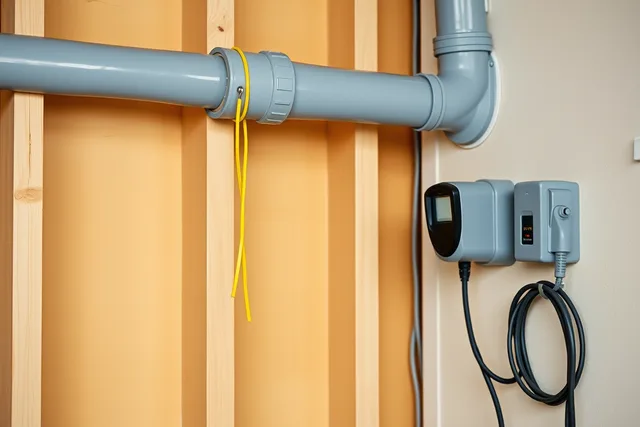
Planning cost line items
- Electrical survey and assessment
- Professional design engineer time
- Legal review of governing documents
- Permit and application fees
- Manager or board time
Ranges below are typical for a building under 30 units, in US dollars. Canadian projects run in similar figures in Canadian dollars, though engineering rates differ by province.
| Planning item | Typical range | Main driver |
|---|---|---|
| Electrical survey or load assessment | $500 to $2,500 | Panel capacity, unit count, service records |
| Engineering design and stamped drawings | $2,000 to $8,000 | Port count, feeder route, utility coordination |
| Legal review of condo or HOA documents | $500 to $3,000 | Lawyer time at $250 to $600 per hour |
| Permit, utility and program fees | $100 to $1,000 per submission | Local fee schedules, utility study rules |
| Manager or board time | 20 to 60 hours | Whether a manager or a volunteer runs it |
The electrical survey is the smallest line and the one that sets every number after it. An assessment that finds less spare capacity than the site plan claims saves you from a quote built on a false premise. It also produces the intake facts a designer needs, which are cheap to gather once and costly to gather twice.
Design is the line boards try to skip. For one or two units, a licensed contractor can often work without it. Across shared parking, stamped drawings are what let a permit submission clear in one review instead of three.
Legal review buys one thing: a policy you can actually enforce. Ontario condo corporations work inside the Condominium Act, including its rules on EV charging installations.
Example: a 20-unit building's planning budget
Take a 20-unit condo adding eight shared ports. A planning budget of roughly $8,000 to $14,000 covers the work:
A 20-unit building's planning budget
- Electrical survey and load studyabout $2,000.
- Engineering design and permit drawingsabout $5,000.
- Legal review of the declaration and rulesabout $1,500.
- Permit, utility and program feesabout $600.
- Manager timeroughly 40 hours.
Now the counterfactual. Skip the survey, open the panel and find it full. The fix is a service upgrade or load management hardware, priced as a change order. Change orders at that scale commonly land between $15,000 and $40,000. HOA charging solutions mistakes that lead to extra costs lists the ones that recur.
What delay adds to the bill
A delayed project pays in four places. None is dramatic alone.
| Delay source | How it shows up | Typical addition |
|---|---|---|
| Expired equipment quotes | Re-quoting at current prices | 3 to 8 percent of equipment |
| Price escalation | Higher gear and labour costs | 4 to 10 percent per year |
| Missed program window | Funds spent, reapply next cycle | The full grant amount |
| Repeat electrical survey | Reviewing stale information | $500 to $2,500 |
Two projects with identical equipment, one finished in four months and one taking a year, do not land at the same price.
[figure 2]
Four months vs one year
Four-month project
- Quotes
- Still valid
- Equipment price
- Locked in
- Program windows
- Caught in time
- Assessment
- Current
- Contractor
- One mobilization
- Meetings
- Fewer cycles
One-year project
- Quotes
- Expired, re-quoted higher
- Equipment price
- Escalated over the year
- Program windows
- Allocation exhausted
- Assessment
- Stale, redone
- Contractor
- Re-mobilized
- Meetings
- Repeated cycles
None of these costs appears as a budget line, and together they often exceed the contingency. Escalation is the quiet one. Equipment quotes commonly hold for 30 to 90 days, so a project that slips two quarters re-quotes at the new price.
Where funding can cover planning itself
Boards apply for equipment money and never ask whether planning is eligible. Many programs fund assessment, design and technical assistance, because funders learned that badly planned installations fail.
State clean transportation funds are a common route. The Alternative Fuels Data Center record of a state clean transportation program shows the breadth these funds cover.
Read your own state's full record rather than a summary, since eligibility differs sharply. A state's complete list of laws and incentives is the level of detail worth checking.
Utilities are the second source, and advisory support or a site assessment is often free. Which apartment EV charging programs fit your building depends on ownership type and location, so check both.
When planning is under-funded
Three skipped steps return as larger bills later.
- No surveya change order for a service upgrade or load management.
- No designa second plan check and a revised permit set.
- No legal reviewa rule the board cannot enforce.
The skipped step is always cheaper than the bill it comes back as.
A board that trims planning saves the smallest number in the project. Everything afterward is priced off whatever the contractor finds once work starts, with no chance to compare options.