Guides
How to plan dual-port EV chargers for multifamily parking
A framework for planning dual-port EV charging at apartments: port power states, stall pairing, cable reach, access, billing, failures, and a worked cost example.
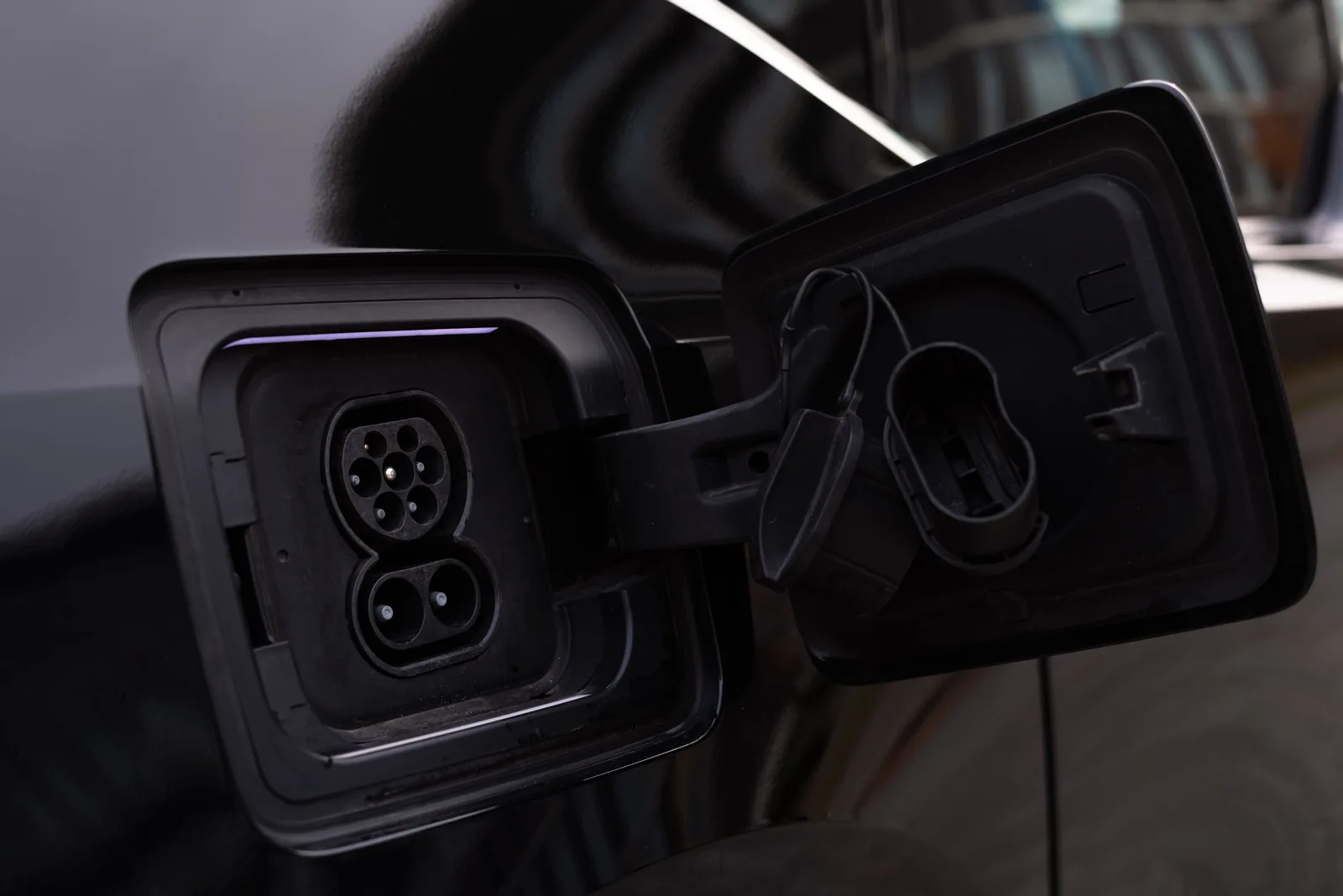
A dual-port EV charger for multifamily parking can serve two vehicles from one enclosure, pedestal, or mounting location. That compact form is useful, but it does not tell an owner how much power each vehicle receives, whether both cables reach, or what happens to two residents when the shared equipment fails.
The right comparison is not one charger against another. It is a complete two-stall service against other ways to serve the same residents. This owner framework covers planning and procurement, not electrical design, product certification, accessible-design approval, or code interpretation.
What to take away
- Two connectors do not mean two full-power sessions. Define the exact two-port electrical architecture and each port's output when it charges alone and when its neighbor is active.
- Test the service with two vehicles, real cable paths, actual parking positions, and an imperfect operating week.
- Treat a shared enclosure as a potential shared failure domain, not simply a space-saving device.
- Compare two-stall service, operating work, and replacement options before approving a dual-port purchase.
Define what dual-port means in the proposal
Use "dual-port" only after the bidder identifies the exact model, connectors, electrical inputs, internal architecture, cable lengths, mounting parts, network service, and software tier. Two connectors may use separate branch circuits, one shared circuit, or another controlled arrangement.
The Alternative Fuels Data Center's Rhode Island make-ready summary notes that dual-port chargers may serve two spaces under that state's described requirements. The state-specific summary does not decide an apartment project's electrical architecture, port allocation, or local compliance. Put the proposed arrangement on the one-line, schedules, submittal, controls narrative, and test script.
State what a port can deliver when it is alone and when its neighbor is active.
Write a two-stall operating brief
Name the users: assigned residents, shared residents, visitors, employees, or a mix. Record parking duration, expected energy need, arrival overlap, overnight access, guest use, payment, enforcement, and the response when one stall remains occupied after charging ends.
Decide whether the two stalls form a permanent pair. If one is assigned and the other is shared, the access and billing logic may be different even though the hardware is common. If both are shared, the property needs a fair turnover or queue rule.
Describe the service promise in resident language. "Available overnight at a managed rate" is more useful than quoting only the charger's maximum nameplate power.
Map every electrical operating state
Create a state table for no vehicles, port A only, port B only, both ports charging, one vehicle complete, one vehicle requesting unusually low current, communication loss, controller fault, emergency shutdown, and restoration. For each state, record the current or power available at each port and the device enforcing the limit.
Document the exact product behavior during one- and two-vehicle use.
If the equipment uses two branch circuits, confirm whether a charger electronics failure can still disable both. If it shares one circuit, model the longer simultaneous session rather than assuming the single-vehicle rate.
Test the difficult charging week
Build a simple energy schedule using resident arrival, departure, starting state of charge, requested energy, and port availability. Include a week when both stalls are used nightly, not only an average day.
Run scenarios for equal sharing, priority allocation, first-connected logic, rotating allocation, a minimum current floor, and a session that finishes early. Identify cases where one resident leaves short of the planned energy. The solution might be more available hours, a different control rule, a higher shared limit, or more ports rather than a different enclosure.
Use observed pilot or commissioning data to replace planning assumptions after launch.
Compare one shared circuit with two circuits
A single shared circuit may reduce electrical material and connected demand, but simultaneous users divide available capacity and depend on the same control path. Two circuits may support more concurrent power, yet require more panel space, conductors, protection, and upstream capacity.
One 40 A, 240 V circuit shared by two ports gives one vehicle about 9.6 kW when it charges alone and about 4.8 kW per port when both charge together. Two 40 A circuits give each port 9.6 kW at the same time, or 19.2 kW combined, and add a second breaker, a second conductor run, and panel space.
Ask the engineer and vendor to define the boundary, maximum input, minimum per-port allocation, response time, measurement source, and fail state in the project documents. Those values should be measured during commissioning rather than assumed from typical hardware behavior.
Use the edition of NFPA 70 (National Electrical Code) adopted by the jurisdiction, including Article 625, Electric Vehicle Power Transfer System, as a starting point for electrical review. Confirm required permits and inspections with the local building department or electrical authority having jurisdiction; requirements and forms vary by location.
The Department of Energy's smart-charge management guidance describes coordination among facilities, vehicles, charging stations, and energy systems. It supports documenting the control boundary, allocation logic, and responsible parties in a shared-port arrangement. It does not establish the port behavior of a specific product.
Compare circuits, conductors, pathways, panels, controls, and upstream demand.
Pair stalls before choosing the pedestal location
Place the proposed unit on a scaled plan between the actual stalls. Show stripes, wheel stops, curbs, columns, bollards, drainage, slopes, walkways, snow storage, accessible routes, doors, and vehicle overhang. A centerline location that looks efficient may put controls behind a curb or expose one cable to traffic.
Treat any expected reduction in trenching, conduit, wiring, or occupied space as a layout hypothesis to verify, not a guaranteed saving. Compare the actual parking plan, electrical route, protection, and service zone.
Pair stalls that can share a safe, maintainable location. Avoid creating a pair merely because their stripes are adjacent.
Prove both cables reach real vehicles
Test front, rear, driver-side, and passenger-side inlets with vehicles parked in permitted orientations. Include large vehicles that fit the stalls. Trace each cable without crossing the neighboring stall, an access aisle, a pedestrian path, or a location where tires can run over it.
Check connector holsters, cable retractors, pull force, cold-weather flexibility, and the path when both cables are in use. A cable that reaches only when stretched diagonally can become a daily resident frustration and an avoidable damage point.
Record the approved parking orientation and any signage needed to make the geometry repeatable.
Integrate accessible use into the pair
Dual-port placement does not automatically make either stall accessible. Evaluate the vehicle space, access aisle, route, charger clear space, controls, connector handling, cable slack, bollards, and the variety of vehicle inlet locations as one layout.
Project review should examine clear space, operable parts, access routes, cable reach, shared access aisles, and vehicle-inlet variation under the applicable requirements.
Mock up the proposed unit and protective posts at full scale. Have people with varied reach, strength, dexterity, and mobility evaluate both connectors. Obtain the project's required professional and jurisdictional review.
The U.S. Access Board's EV charging accessibility guidance describes accessible routes, operable parts, and other EV charging considerations. Pair that guidance with review of applicable provisions of the 2010 ADA Standards for Accessible Design and state and local accessibility requirements by the project professional and jurisdiction. The guidance does not determine whether a particular apartment project meets applicable requirements.
Examine the shared failure domain
List components whose failure affects one port and those that affect both: enclosure power electronics, breaker, controller, contactor, display, payment reader, modem, gateway, cloud service, pedestal impact, and emergency shutdown. Ask whether one damaged connector can be isolated while the other remains available.
Define the resident response when the entire pair is unavailable. The plan can include another shared charger, temporary reassignment, a waitlist rule, prompt communication, and a repair escalation target.
Count availability by usable port-hours, not by the number of enclosures that appear online.
Separate access and billing by port
Confirm whether the network identifies each connector separately in permissions, rates, sessions, energy records, faults, refunds, and reports. Test two residents starting at nearly the same time, one ending early, a swapped cable, a failed authorization, and a refund on only one port.
The property should be able to explain which resident used which connector and what rule produced a charge without exposing another resident's information. If electricity is included in rent, the port-level record can still support capacity planning and troubleshooting.
Document offline behavior. Both connectors should not become unusable simply because a remote billing service is temporarily unavailable unless that result is an explicit property decision.
Compare equipment, trenching, panel upgrade and maintenance cost per usable port
Price equipment, circuits, conductors, trenching, mounting, protection, network setup, licenses, transaction fees, load controls, cable management, commissioning, maintenance, spare parts, repairs, outage coverage, and replacement. Compare the same two-stall service over the same ownership period.
Cost per Usable Port
Dual-Port Unit
- Equipment
- Lower
- Mounting
- Shared
- Repair risk
- Concentrated
- Replacement
- Whole unit
- Pathway
- Shared
Two Single-Port
- Equipment
- Higher
- Mounting
- Duplicated
- Repair risk
- Independent
- Replacement
- One unit
- Pathway
- Duplicated
This worked example uses round planning numbers, not a market price. Equipment and mounting $5,000, trenching and conduit $4,000, a 100 A panel addition $7,000, and network setup with a first-year license $1,000 come to $17,000 installed. That is $8,500 per port before maintenance. Obtain comparable, site-specific bids with the same scope before budgeting. Typical maintenance and repair adds $200 to $600 per port per year.
A dual-port unit may reduce duplicated mounting or pathway work while concentrating repair risk. Two single-port chargers may create more equipment locations but allow independent replacement. Include labor and resident disruption when an entire pedestal is exchanged.
Treat incentives as a separate scenario until the current program confirms whether it counts ports, connectors, stations, circuits, or qualified costs. Ask the serving utility about programs such as Con Edison PowerReady, PG&E EV Charge Network, and Southern California Edison Charge Ready in their respective service areas; verify current status and eligibility before relying on funding. Model capital costs under explicit scenarios: the owner or condo association pays for equipment and site infrastructure, residents contribute through an agreed capital or usage charge, and the utility funds eligible make-ready work only if program rules allow it. Specify who owns the equipment and who pays for maintenance, repairs, and replacement; do not treat utility funding as automatic.
Procure a tested configuration
Require a marked product schedule showing each connector, cable, electrical input, port allocation rule, communications option, mounting kit, environmental rating, protective accessory, subscription tier, and warranty. Resolve whether a future product revision can change simultaneous-use behavior.
The ChargePoint CT4000 series includes dual-port Level 2 stations, and the ChargePoint Express 250 is a dual-port DC fast charger; treat these as examples to evaluate, not recommendations or assurances of current availability. Confirm the exact model and revision, simultaneous-port behavior, connector options, certifications, and current datasheet with the manufacturer. Tesla Wall Connector units are one documented example of the group approach, where up to six single-port units share one branch circuit at a group current set at commissioning; the stated 8 kW each is not a universal output and must be verified for the configured group. Grouped single-port wallboxes are not a dual-port charger.
A dual-connector DC unit may instead serve one car at its rated 50 kW and split to roughly 25 kW per port when both are active. Models and firmware change, so confirm the current datasheet.
Ask bidders to demonstrate the proposed configuration rather than a similar single-port model. Keep an exceptions log for anything unavailable or dependent on third-party hardware, software, or field settings.
Control substitutions. A different dual-port unit may alter foundation dimensions, cable reach, circuits, load logic, user interface, data, support, and accessible use even when the advertised maximum power is similar.
The General Services Administration EVSE ordering guide identifies procurement topics including power management, metering, networking, data, operation, repair, and maintenance. It supports comparing the complete service scope of a dual-port offer. It does not prescribe a private property's acceptance terms.
Commission both ports together
Verify identity, circuit, voltage, settings, labels, cable reach, connector storage, and protective clearances. Then test port A alone, port B alone, both together, a completed session on one side, controller or communications loss, restart, access, billing, exports, alarms, and restoration.
Commissioning Both Ports
- Verify identity, circuit, voltage, settings, labels
- Test port A alone and port B alone
- Test both ports together
- Test completed session on one side
- Test controller or communications loss
- Test restart, access, billing, exports, alarms
- Record timestamps, measured values, results, retests
Use representative vehicles and record timestamps, measured values, configuration, accounts, results, corrections, and retests. Confirm staff can isolate a damaged port, identify the correct circuit, and open a support case without installer-only access.
The final record should include the two-stall operating brief, approved layout, electrical and control descriptions, product evidence, contract, subscriptions, serial numbers, port labels, commissioning, warranties, spares, settings, administrator custody, and change history.
Dual-port equipment works best when the property plans two resident experiences, two cable paths, and several power states, not merely one object between two stripes.
Two-stall planning table
| Workstream | Decision deadline before purchase | Define before purchase | Verify during commissioning |
|---|---|---|---|
| Electrical behavior | Before design freeze | Circuits, limit, allocation, measurement boundary, and fail state | One-port and two-port measured operation |
| Parking layout | Before bid release | Stall pair, cables, controls, protection, route, and service space | Representative vehicles and both cables in use |
| Resident service | Before contract award | Access, billing, queue, fault response, and shortfall policy | Enrollment, two sessions, refund, and outage response |
| Shared failure domain | Before purchase order | Common components, isolation capability, spare plan, and escalation | Port-specific and common-component fault response |
| Change control | At contract signature | Product configuration, support, records, warranty, and expansion triggers | Staff can identify, support, and document both ports |
Common questions
Does two connectors mean two full-power sessions?
No. The project must document and measure what each port receives when it is alone and when the other port is active.
Can two spaces share a dual-port charger safely?
They can only be treated as a pair after the actual vehicles, cable paths, controls, access routes, protection, drainage, and service space have been tested together.
What makes a dual-port charger a shared failure domain?
Any common circuit, power electronics, controller, display, communications component, pedestal impact, or shutdown condition can affect both resident services.
In this guide
- Dual-port vs single-port EV chargers: how to pick for apartment sitesCompare dual-port vs single-port EV chargers for apartment stalls: circuits, cable reach, outage redundancy and cost per usable port.
- Dual-port EV charger cost: 2027 planning rangesA dual-port EV charger cost estimate for apartments should include installation, software, payment fees and shared-component repairs—not just the unit.
- Dual-port EV charger layout acceptance and closeout recordClose each dual-port EV charger layout warning at acceptance: compare the built stalls with the plan, test two vehicles at once, and keep the record.