Guides
Part of Apartment EV charger access observation: how to log a concern and refer it for review
Apartment EV charger access referral: who owns the next question
Apartment EV charger access referral guidance routes access, equipment, and billing questions to the right owner, with a message template and escalation steps.
What to take away
- Send it to the role that owns the answeran ADA coordinator or property compliance manager for access barriers, the network's support owner for equipment faults, a program administrator for program terms.
- Include the observed fact, the charger or route by label, one narrow question, and a reply date.
- Leave out diagnoses, legal conclusions, and personal contact details the task does not need.
- A dated reply or a written refusal closes the handoff. It does not fix the charger.
- Escalate in writing when the owner misses your reply date. Five to ten business days is a common internal window; public programs run longer.
A referral is a handoff, not a complaint
An apartment EV charger access referral sends one observed concern to one owner who can answer the next question. It records what was seen, where, and when.
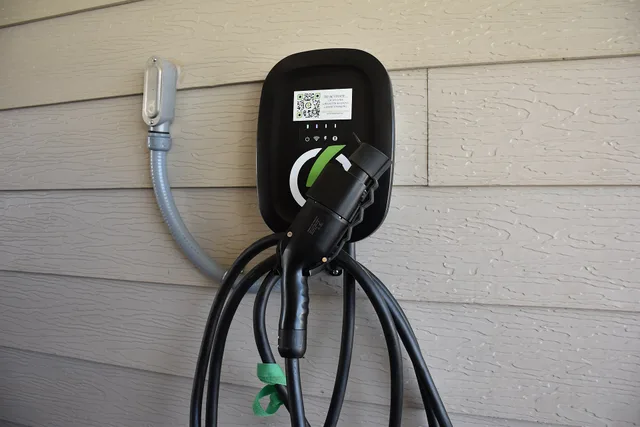
Referrals travel on three paths: to the charging provider, to the property team, or to an outside reviewer such as a program administrator. Separating them keeps a concern from reaching everyone at once and being owned by no one. For equipment faults, use the support channel printed on the charger or listed in the charging app; the network and its channel vary by site. If you cannot identify them, ask the property account administrator to name the contracted network and open a support ticket.
Route the referral to the right owner
Provider
- Handles
- Support instruction
- Example
- Service ticket
- Owner of
- Customer support
- Avoid
- Generic team
Property team
- Handles
- Obstruction or policy
- Example
- Resident notice
- Owner of
- Amenity policy
- Avoid
- Generic team
Qualified reviewer
- Handles
- Location or layout
- Example
- Site assessment
- Owner of
- Design question
- Avoid
- Generic team
A dated log makes the facts easy to hand over. The apartment EV charger access observation guide lists what to record at the charger, from label numbers to the time of day.
Match the question to the role that owns it
Start with the question, not the repair. Ask who holds current authority for that condition, then send the referral there.
Match the question to the role
| The question is about | Send it to | That role can answer |
|---|---|---|
| A blocked route, sign height, or reach range | ADA coordinator at a public housing authority, or the property compliance manager | Which access standard applies, and what the site policy says |
| Cable, connector, card reader, or session failure | Network support owner or property account administrator | Ticket number, service window, repair status |
| Who may bill a resident, and how the charge is set | Program administrator or property finance lead | The approved billing method |
| Whether an incentive or rebate applies | Program administrator | Eligibility terms for that program |
For a California site, California Energy Commission (CEC) GFO 24-604 is a grant funding opportunity for multifamily charging projects that improve resident access and ease of use. Read the California multifamily charging solicitation. The solicitation document sets applicant eligibility, funding terms, and deadlines; the program administrator owns questions about those terms.
Billing is a separate question from access. Rules on submetering and cost allocation vary by state and property type. Send the billing method and meter arrangement to the property finance lead, and ask the state public utility commission which rule applies. For California sites, ask the California Public Utilities Commission whether its rules apply. The Alternative Fuels Data Center summarizes billing methods for EV charging at rental properties.
If the same concern keeps appearing at several spaces, the multifamily EV charging roadmap shows how single referrals turn into a phased site plan.
Example: a referral message you can adapt
Subject: Referral, EV charger access concern, Building B, Space 14 Observed: On 12 March, the cable at Space 14 did not reach a vehicle parked in the accessible space. Location: Building B, Level 2 charger, label 2187, Space 14. Question: Which standard or site rule covers cable routing at this space, and which role reviews it? Reply requested by: 20 March. Attachment: one dated photo of the space, no license plates visible. Sender: resident, name withheld, routed through property management.
Keep the message under 200 words. Put the question in the first line so a recipient can route it without opening attachments.
Protect the reporting resident
A checklist before you send:
- Keep the date, the location, and one clear photo.
- Remove license plates, faces, unit numbers, and door codes from images.
- Do not attach account statements, medical notes, or full email threads.
- Send attachments through the property's approved channel, not a personal account.
If the condition involves heat, tripping breakers, or repeated failures, ask for a qualified inspection rather than a policy answer.
Expect a reply date, then escalate
State a reply date in the referral. Property teams and network support desks commonly answer within five to ten business days. Public program administrators can take several weeks. Treat both as typical ranges, not guarantees.
If the date passes, send one follow-up that repeats the question, the location, and the original date. Then move to the next owner in writing.
Expect a reply date
- Follow up with the named recipient and quote the original referral.
- If the reply says the concern is outside that role's scope, ask for the correct owner in writing.
- Send a new referral to that owner with the earlier reply attached.
- For access barriers in common areas, copy the ADA coordinator or the housing authority compliance office.
- Keep every message dated and stored with the original observation.
The U.S. Access Board develops ADA Accessibility Guidelines. The U.S. Department of Justice's 2010 ADA Standards for Accessible Design set requirements for covered facilities. For a review, identify whether Title II (28 CFR Part 35) or Title III (28 CFR Part 36) applies, then check the relevant provisions, including 28 CFR §§ 35.151 or 36.406 where applicable. The Access Board's ADA standards resource is a reference, not a site-specific ruling; which provisions apply depends on the facility and observed condition.
A reply closes the handoff, not the issue
Mark the referral finished when the named owner replies or the correct route is documented. That is not the same as fixing the cable or changing a billing rule. Open a separate task with its own owner and date.
Keep each reply dated and attributed to the person who sent it. A support statement is not a compliance finding, and a referral record should not read as one.
When a reply points to a future purchase or upgrade, questions to ask before buying shared charger planning gives you a checklist for that next step.
Common questions
Can a resident send a referral straight to the charging provider?
Follow the property's current communication process. If the provider owns the session fault, say so in the referral and keep the property manager copied.
What if the owner says the concern is outside its scope?
Record that reply and the role it names. Then send a new dated referral to that role with the earlier answer attached.
Does a reply settle whether a charger meets the ADA?
No. It records what the recipient said. A compliance conclusion needs the applicable standard, the site facts, and a qualified review.
How long should I wait before escalating?
Until the reply date you set. If you set none, five to ten business days is a workable default, with one written follow-up after that.